



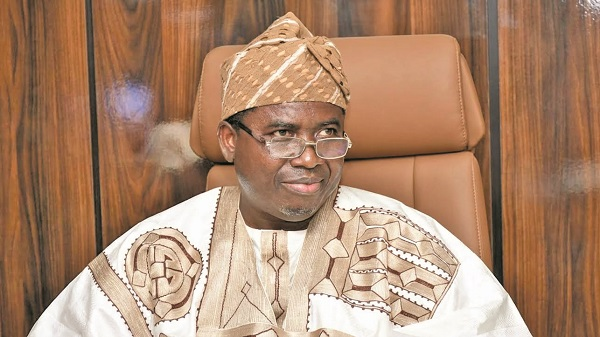
The warning signs ahead of Nigeria’s 2027 general elections are becoming increasingly difficult to ignore. From London, where protesters confronted the Chairman of the Independent National Electoral Commission (INEC), Professor Joash Amupitan, to Lagos, where suspected political thugs disrupted a town hall meeting organised by supporters of the Nigeria Democratic Congress (NDC), Thursday, November 12, presented two disturbing reminders of the challenges threatening the country’s electoral future.
Although the incidents occurred in different countries and under different circumstances, they point to a common and troubling reality: Nigeria may be heading towards another volatile electoral season, with public confidence in the electoral process under pressure and political violence already rearing its ugly head.
In London, protesters reportedly surrounded Amupitan’s vehicle and prevented him from leaving Chatham House, where he had delivered a presentation. Their grievances centred on alleged irregularities in INEC’s preliminary voters’ register, including duplicate entries, AI-generated photographs and fictitious polling units.
The confrontation was more than an embarrassing moment for Nigeria’s electoral chief on an international platform. It was a public manifestation of growing distrust in the institution entrusted with protecting the credibility of the country’s elections.
Interestingly, Amupitan had already acknowledged some of the concerns raised by critics. On November 9, he disclosed that INEC had removed 1,608,660 invalid registrations from the voters’ register and identified 54 individuals across ten states for possible disciplinary action or prosecution.
At Chatham House, he also admitted that glitches in the transmission of results during the 2023 general elections had damaged public confidence in the commission.
His willingness to acknowledge these shortcomings deserves commendation. However, the discovery of more than 1.6 million invalid registrations in the electoral register inevitably raises questions about the integrity of the system and the effectiveness of the safeguards designed to protect it.
The implications of such doubts go beyond public demonstrations and political criticism. When citizens begin to question whether their votes will count, confidence in peaceful electoral competition gradually erodes. And when that confidence weakens, desperate political actors may begin to see violence as an alternative route to power.
That is where the London confrontation intersects with the disturbing reality unfolding in Lagos.
The political violence witnessed in Lagos on Thursday was another painful reminder of how deeply the culture of thuggery has become entrenched in Nigeria’s political landscape. Supporters of the NDC had gathered for a town hall meeting when suspected political thugs invaded the venue, disrupted proceedings, destroyed property and attacked participants.
This was not merely an assault on a political gathering; it was a direct attack on the fundamental democratic rights of citizens to assemble, express their opinions and participate in the political process without intimidation or fear.
Sadly, such incidents have become an all-too-familiar feature of Nigeria’s political environment. Rather than being treated as an unacceptable assault on democracy, political violence is increasingly regarded as an unfortunate but predictable feature of electioneering.
Nigeria has paid dearly for this dangerous culture.
The 2011 general elections remain one of the darkest chapters in the country's electoral history. Following the victory of former President Goodluck Jonathan over Muhammadu Buhari, who later became president, widespread post-election violence erupted across several northern cities. Armed with machetes and guns, rioters unleashed mayhem, leaving more than 200 people dead and approximately 40,000 displaced, according to reported estimates.
Similarly, in February 2023, Oyibo Chukwu, the Labour Party’s senatorial candidate for Enugu East, was murdered when his convoy was attacked days before the general elections.
These incidents demonstrate that electoral violence in Nigeria is not an isolated occurrence. It is a recurring national threat that has claimed lives, destroyed livelihoods and weakened public confidence in democratic institutions.
More worrying is the indication that the danger is intensifying ahead of 2027.
The African Centre for Security, Governance and Development has documented 70 election-related attacks and 27 deaths so far in 2026. The Nigeria Civil Society Situation Room, relying on a threat assessment by the CLEEN Foundation, has also reported 27 deaths within the first ten months of the year, identifying campaign rallies and political party offices as major targets.
Although the two reports may differ in their methodologies, their findings point in the same direction: political violence is already emerging as a serious security concern long before the 2027 elections.
Perhaps the most troubling dimension of this development is the growing contradiction between Nigerians’ desire to participate in democracy and their fear of the violence surrounding it.
A September survey conducted by Yiaga Africa found that 84 per cent of Nigerians of voting age were keen to participate in the 2027 elections. Yet approximately 61 per cent expressed concerns about their personal safety because of the risk of electoral violence.
This is a dangerous contradiction. A democracy cannot claim legitimacy when citizens are willing to vote but are afraid to attend campaign rallies, political meetings or even approach polling units.
The right to vote means little if exercising that right comes with the risk of being beaten, injured or killed.
The time has therefore come for the Federal Government, security agencies, political parties and other electoral stakeholders to confront the growing menace of political violence with the seriousness it deserves.
The government must first demonstrate an uncompromising commitment to protecting democratic participation. Security responses must be impartial and free from political influence. The responsibility of the state is to protect every Nigerian, irrespective of the political party they support.
The conversation must also move beyond the familiar arguments over permits for political rallies, meetings and town halls. No administrative disagreement should become an excuse for violence, intimidation or the suppression of political opponents.
The Nigeria Police Force must equally become more proactive in preventing election-related violence. Security agencies cannot continue to arrive after political thugs have attacked citizens, destroyed property and disappeared into the streets.
The growing threats ahead of 2027 demand intelligence-driven policing, effective surveillance of political flashpoints and early intervention against individuals and groups planning attacks. Preventing violence must become a priority rather than allowing security agencies to respond only after the damage has been done.
Political actors are already positioning themselves for the next electoral contest. Those who intend to deploy violence as a political strategy must understand that the law will catch up with them, regardless of their political connections or influence.
More importantly, accountability must extend beyond the young men recruited to unleash violence to the political financiers and sponsors who bankroll them.
One of the greatest weaknesses in Nigeria’s response to electoral violence is the tendency to arrest and parade suspected foot soldiers while those who finance, organise and provide political protection for them remain untouched.
Political thuggery is rarely an isolated enterprise. It often operates through networks involving political interests, financiers and influential individuals who benefit from the intimidation of opponents. Until these networks are dismantled and their sponsors prosecuted, the country will continue to treat the symptoms while leaving the real problem untouched.
The National Assembly must also demonstrate greater urgency in addressing the long-standing proposal for an Electoral Offences Commission. Nigeria cannot continue to discuss electoral offences without establishing an effective institutional mechanism for investigating and prosecuting offenders.
Until political sponsors are made to face the full weight of the law, electoral violence will remain an attractive and relatively cheap instrument of political competition.
INEC, on its part, must urgently rebuild public confidence in the electoral register and the broader electoral process.
Removing 1,608,660 invalid registrations is a significant step, but the commission must go further by making the cleaned register accessible, transparent and verifiable. Political parties, civil society organisations and eligible voters must have sufficient opportunity to scrutinise the register and identify irregularities, including questionable entries and fictitious polling units.
Public trust cannot be restored through press conferences and official assurances alone. It must be earned through transparency, accountability and verifiable evidence that the electoral system is credible.
Ultimately, the London confrontation and the Lagos attack should not be treated as unrelated incidents. They are two warning signals of a democracy facing pressure from different directions.
An electoral system that loses public confidence creates room for suspicion, desperation and political hostility. Similarly, a political environment where violence goes unpunished further deepens distrust and discourages citizens from participating in the democratic process.
The two developments feed into each other, creating a dangerous cycle that could undermine the 2027 elections long before the first ballot is cast.
Nigeria must not wait until lives are lost, communities are displaced and election results become a source of nationwide unrest before taking decisive action. The lessons of previous elections are too painful to ignore, and the warning signs emerging today are too serious to dismiss.
The 2027 elections must be a contest of ideas, policies, leadership credentials and the people's mandate, not a battle of political financiers, armed loyalists and hired thugs.
The warning has come from both London and Lagos. What remains is whether those entrusted with protecting Nigeria's democracy will rise to the occasion and act decisively before the gathering storm becomes another national tragedy.