



The European Union (EU) has raised concerns over increasing reports of political violence, hate speech and intimidation ahead of Nigeria’s 2027 general elections, warning that the trend poses a threat to democratic stability and citizens’ participation in the electoral process.
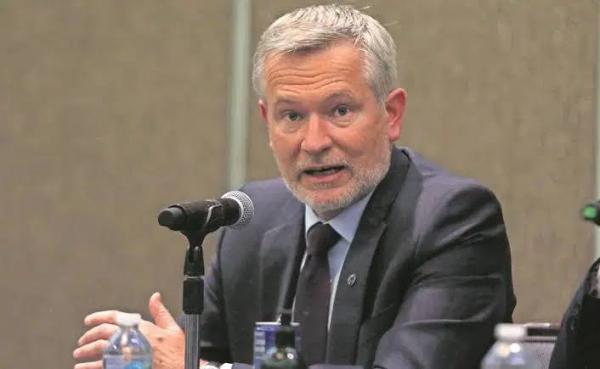
The EU Ambassador and Head of Delegation to Nigeria and ECOWAS, Gautier Mignot, expressed the concern on Wednesday during the opening session of the Civil Society and Human Rights Defenders Forum on the State of Human Rights in Abuja.
Mignot’s warning comes against the backdrop of several reported attacks on political activities and supporters in different parts of the country.
In October, supporters of the All Progressives Congress (APC), travelling to attend a campaign flag-off in Funtua, Katsina State, were reportedly attacked along the Yashi-Funtua route. A female passenger sustained injuries, several vehicles were damaged, while the police subsequently announced the arrest of 14 suspects.
In another incident, the convoy of the Nigeria Democratic Congress (NDC) presidential candidate, Peter Obi, was attacked in Calabar, Cross River State, on November 4, 2026. The police confirmed damage to vehicles and the arrest of a suspect.
Similarly, one person was killed and five others injured on November 7 during an attack on a political procession and rally organised by NDC supporters along Nnebisi Road in Asaba, Delta State.
The National Peace Committee has also disclosed that it documented 60 election-related incidents within one month, including cases of violence, intimidation and threats.
Speaking at the Abuja forum, Mignot warned that such developments could erode democratic gains and create an atmosphere of fear capable of preventing citizens from exercising their political rights.
He identified open public forums, independent media, peaceful assembly and vibrant civil society organisations as critical components of a credible electoral system.
According to him, these platforms allow citizens to access reliable information, engage in public debate and scrutinise candidates without fear of censorship, harassment or retaliation.
The EU envoy explained that protecting civic and political spaces also strengthens accountability by allowing citizens and civil society organisations to monitor elections, assess campaign promises and challenge government policies.
He warned that weakening these democratic safeguards could undermine public confidence in elections and expose the electoral process to manipulation.
Mignot reaffirmed the EU’s commitment, alongside its member states, to supporting efforts aimed at preserving civic freedoms and strengthening democratic institutions in Nigeria.
He also pledged continued support for the National Human Rights Commission (NHRC) and civil society organisations, stressing that the EU's involvement was intended to strengthen local institutions rather than interfere in Nigeria’s electoral affairs.
“Our objective is not to interfere in the elections but to support legitimate Nigerian stakeholders to fully play their roles in order to contribute to a free, fair, credible electoral process,” he said.
The forum, organised by the NHRC, was held under the theme, “Protecting Human Rights in Civic and Political Spaces in the 2027 Elections.”
In his remarks, the Executive Secretary of the commission, Dr Tony Ojukwu, SAN, said the protection of democratic rights must extend beyond election day, stressing that democracy depends on citizens being able to freely express themselves, organise, assemble and choose their leaders without intimidation.
He referenced Sections 14, 39 and 40 of the Nigerian Constitution, Article 13 of the African Charter on Human and Peoples’ Rights and Article 25 of the International Covenant on Civil and Political Rights (ICCPR) as legal guarantees of citizens’ participation in public affairs.
Ojukwu warned that when these fundamental rights are suppressed, democracy gradually deteriorates through fear, public apathy and declining confidence in institutions.
He also raised concerns over the increasing challenges faced by journalists and human rights defenders, including harassment, arbitrary arrests and the alleged misuse of legal provisions, particularly under the Cybercrimes Act.
The NHRC chief further identified political intimidation, voter suppression, hate speech, incitement and prohibitive nomination fees as major obstacles to inclusive political participation.
He noted that excessive nomination fees could prevent women, young people and persons with disabilities from contesting elections, thereby limiting their representation in the political process.
Ojukwu also expressed concern over regulatory uncertainties surrounding digital platforms and the lack of accountability for electoral offences.
He warned that the failure to prosecute offenders could encourage further violations as the country approaches the 2027 polls.
“As long as people can commit these election-related offences and go scot-free, then anybody can try anything they like,” he said.
He, however, described the identified challenges as warning signs that could still be addressed if relevant authorities and stakeholders took immediate action.
Also speaking, the National Chairman of the Inter-Party Advisory Council (IPAC), Dr Yusuf Dantalle, called for stronger measures to prevent electoral violence, drawing attention to lessons from recent off-cycle elections, particularly the campaign period preceding the Osun State governorship election.
In a goodwill message delivered on his behalf by Mr Chinedu Obi, Dantalle maintained that democratic credibility depended on protecting the entire electoral process, from campaigns and voter mobilisation to voting, collation and declaration of results.
He warned political parties and their supporters against turning political competition into hostility, insisting that opponents must not be regarded as enemies.
“As we approach 2027, political competition must not become warfare. Political opponents are not enemies, and electoral victory must never be pursued at the expense of human lives, public peace and national unity,” he stated.
The IPAC chairman urged political parties, candidates and supporters to prioritise issue-based campaigns, political tolerance and responsible communication.
He also called on all stakeholders to reject electoral violence, hate speech, voter suppression and political intimidation, warning that the credibility of the 2027 elections would depend largely on their collective commitment to peaceful democratic engagement.