


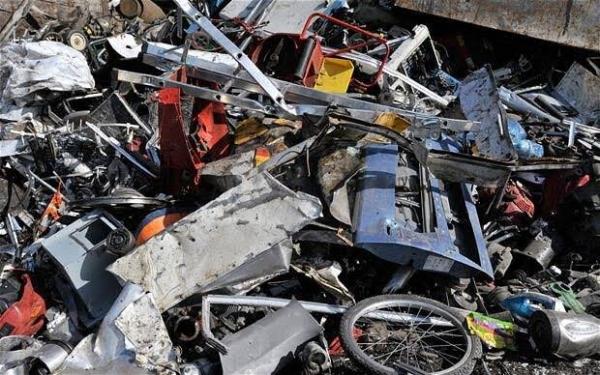
The Federal Government is planning to introduce mandatory licensing for scrap metal dealers and recycling operators across Nigeria as part of measures to tackle the theft of metallic materials and vandalism of critical national infrastructure.
Under the proposed regulations, operators in the scrap metal industry will be required to obtain relevant licences, verify the sources of materials they purchase and maintain proper transaction records to prevent stolen metals from being traded through recycling businesses.
The Minister of Steel Development, Shuaibu Audu, disclosed this in a statement issued by the ministry’s Head of Press and Public Relations, Maureen Tine-Iulun, on Tuesday.
Audu, represented by the Director of the Metallurgical Raw Material Development and Investment Promotion Department, Ime Eprikpo, spoke at a stakeholders’ engagement in Lagos on the validation of the proposed Scrap Metal (Collection, Trading, Recycling and Regulation) Regulations, 2026.
The minister said the initiative was aimed at sanitising the scrap metal industry, protecting public infrastructure and establishing a transparent system that would support Nigeria’s steel and manufacturing sectors.
He expressed concern that the activities of unregulated scrap dealers had contributed to the persistent theft of electricity cables, railway components, manhole covers and other metallic installations.
According to him, the development had caused substantial economic losses, disrupted essential public services and increased the cost of maintaining critical infrastructure.
Audu, however, emphasised that the government’s intention was not to frustrate legitimate businesses or undermine the livelihoods of thousands of Nigerians engaged in scrap metal collection and trading.
“Our objective is not to suppress legitimate commercial activity. Rather, it is to establish a system in which lawful businesses can operate with greater clarity and confidence, while activities involving stolen materials, unsafe practices or environmental harm are addressed through appropriate regulatory and legal measures,” he said.
He explained that scrap metal remained a significant raw material for steel production, foundry operations and other manufacturing activities, noting that an organised recycling industry could minimise waste, generate employment and accelerate industrialisation.
The proposed regulations are expected to establish licensing and supervision requirements for operators, regulate collection and aggregation centres, introduce transaction tracking mechanisms and strengthen monitoring and enforcement across the sector.
The framework will also address environmental protection and occupational safety while discouraging the purchase and sale of illegally obtained metallic materials.
The minister called for stronger verification of scrap suppliers, adequate documentation of transactions and closer cooperation between regulatory agencies and security organisations to ensure effective implementation.
Addressing concerns about the potential impact on small-scale operators, he said the regulations would accommodate informal collectors and traders by providing opportunities to formalise their businesses through requirements proportionate to their operational size and risks.
He added that larger aggregation, processing and recycling facilities would be subjected to appropriate licensing and safety standards.
Audu urged industry stakeholders to scrutinise the draft regulations and submit recommendations, particularly on implementation, operational requirements and compliance costs.
He assured them that their contributions would be considered before the regulations were finalised.
Also speaking, the Permanent Secretary of the ministry, Nura Abba Rimi, represented by the Director of the Metallurgical Inspectorate and Environmental Protection Department, Christopher Wanje, described effective regulation of the scrap metal industry as essential to building a competitive domestic steel sector.
Rimi said the proposed framework would help eliminate the illegal trade in stolen metals, safeguard public and private infrastructure and ensure that recycling activities contribute to Nigeria’s economic development.
He maintained that the government was committed to creating a transparent and sustainable business environment that would encourage investment, support genuine entrepreneurs and guarantee reliable raw material supplies for domestic steel manufacturers.
Meanwhile, the National President of the National Association of Scrap and Waste Dealers Employers of Nigeria, Ogbu Luke Uchechukwu, described the validation exercise as a significant milestone for the industry.
He said the engagement represented an important step towards building an organised and economically sustainable scrap and waste sector.
The proposed regulations come amid renewed efforts by the Federal Government to strengthen local manufacturing, expand domestic steel production and reduce dependence on imported industrial raw materials.