



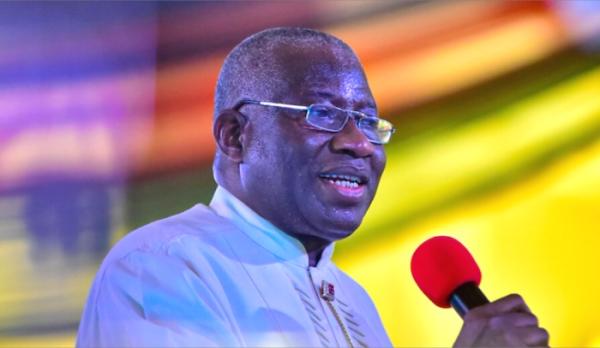
Former President Goodluck Jonathan has described several policies introduced by former Head of State, Gen. Yakubu Gowon (retd.), as enduring initiatives that remain relevant to Nigeria’s development and unity.
Jonathan spoke on Tuesday in Abuja while chairing the public presentation of Gowon’s autobiography, My Life of Duty and Allegiance.
He praised Gowon for demonstrating courage and leadership during one of the most turbulent periods in Nigeria’s history, particularly during the Nigerian Civil War.
“Many people can lead effectively in times of peace and stability, but true leadership is tested during periods of crisis,” Jonathan said.
According to him, Gowon assumed leadership at a young age and successfully guided the country through the civil war while maintaining a commitment to national unity.
“Despite the divisions and pains of that era, he pursued reconciliation through his ‘No victor, no vanquished’ policy, which laid the foundation for healing, reconstruction and reintegration,” he added.
Jonathan noted that Gowon’s legacy extends beyond wartime leadership, highlighting several policies and infrastructure initiatives introduced during his administration.
He identified the National Youth Service Corps (NYSC), established in 1973, as one of Gowon’s most impactful legacies, saying the scheme was designed to foster national integration by encouraging young Nigerians to live and work outside their regions of origin.
“Although we have not fully realised that vision, the NYSC remains a bold and far-sighted initiative aimed at promoting unity among Nigerians,” he said.
The former president also shared a personal experience, recalling how two NYSC members posted to his secondary school in 1973 influenced his academic development.
According to Jonathan, the teachers, identified as Mr Balogun and Mr Ojukwu, taught science subjects and contributed significantly to shaping his educational foundation.
Jonathan further commended Gowon for his role in the establishment of the Economic Community of West African States (ECOWAS), describing it as a major policy achievement that continues to strengthen regional cooperation and integration in West Africa.
“These are enduring policies that will continue to shape society and promote development,” he stated.
He also stressed the importance of political leaders documenting their experiences, noting that memoirs help preserve institutional memory and deepen public understanding of governance and leadership.
Jonathan praised Gowon’s continued involvement in peace-building and national development efforts long after leaving office, particularly through initiatives such as Nigeria Prays.
“True leadership does not end with holding political office. It continues through service to humanity and commitment to peace,” he said.
He added that Gowon’s autobiography comes at a time when many countries across the world are grappling with insecurity, political polarisation and social divisions.
“There is much contemporary leaders and younger generations can learn from the experiences captured in this book, especially the values of patience, dialogue, restraint, courage and reconciliation,” Jonathan said.
The former president also hinted that he may publish his own memoirs in the future.