




The Federal Government has revised its 2026 borrowing plan, raising the total by ₦11.31 trillion to ₦29.20 trillion, up from the initial projection of ₦17.89 trillion outlined in the 2026 Abridged Budget Call Circular issued in December 2025.
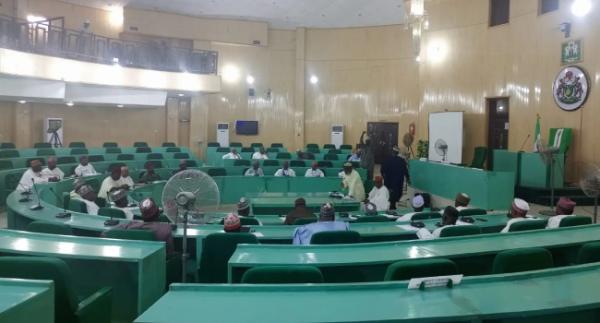
The increase is reflected in the 2026 Appropriation Bill, approved by the National Assembly, and detailed in the House of Representatives Order Paper dated Tuesday, March 31, 2026, along with the attached budget schedule reviewed by Channels Television.
The upward adjustment underscores a sharp rise in the fiscal deficit, now estimated at ₦31.46 trillion. Total government expenditure for 2026 is projected at ₦68.32 trillion, while revenues are expected to reach ₦36.87 trillion. Additional financing sources include ₦189.16 billion from asset sales and privatisation, and ₦2.05 trillion from multilateral and bilateral project-tied loans.
The original borrowing estimate was based on a lower projected deficit of ₦20.12 trillion, highlighting the significant expansion in both deficit and financing requirements. Government revenue is expected to be drawn from federation allocations, independent sources, and earnings from government-owned enterprises. Specifically, federation revenues are projected at ₦25.92 trillion, government enterprises at ₦5.85 trillion, and independent revenues at ₦4.31 trillion. Grants and aid are estimated at ₦1.37 trillion, with an additional ₦300 billion expected from special funds.
On the expenditure side, debt service remains one of the largest budget items, projected at ₦15.81 trillion, including ₦10.16 trillion for domestic debt and ₦5.36 trillion for foreign obligations. Recurrent non-debt spending is estimated at ₦15.43 trillion, while capital expenditure is projected at ₦32.29 trillion, and statutory transfers at ₦4.80 trillion.
In a letter to Senate President Godswill Akpabio, read at plenary last week, President Bola Tinubu requested approval to raise the 2026 Appropriation Bill by ₦9 trillion, increasing the total budget from ₦58.4 trillion to ₦67.4 trillion. The increase is largely attributed to a $10 per barrel rise in the oil benchmark, expected to generate ₦2.592 trillion in additional revenue.
Lawmakers also highlighted stronger projected contributions from the telecommunications sector, following recent tariff adjustments and policy reforms. MTN Nigeria is expected to contribute ₦724 billion in company income tax in 2026, while Airtel Nigeria is projected to add ₦150 billion, bringing total additional revenue from the sector to ₦874 billion.
Despite these revenue-enhancing measures, the National Assembly approved an increase in external borrowing by ₦6.163 trillion to bridge the funding gap, noting that overall debt levels remain within what they described as manageable limits.