



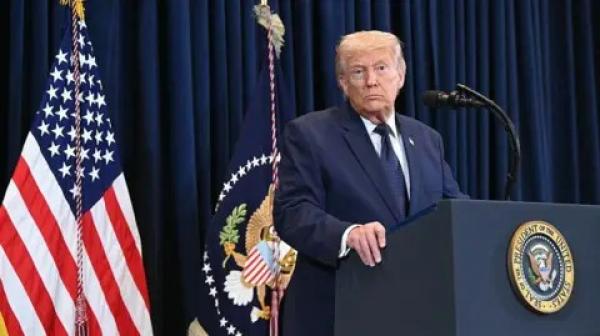
U.S. President Donald Trump on Saturday called on other nations to deploy naval vessels to help secure the Strait of Hormuz, a critical global energy transit route disrupted amid ongoing tensions in the Middle East.
Trump said the United States would soon begin escorting oil tankers through the strategic waterway and encouraged allied and affected countries to participate in safeguarding maritime traffic. In a post on Truth Social, he stated that multiple nations impacted by what he described as Iran’s attempt to restrict passage through the strait would send warships in coordination with the United States to keep the route open and secure.
He specifically referenced China, France, Japan, South Korea, the United Kingdom, and other countries as potential contributors to the effort.
The Strait of Hormuz, which lies between Iran and Oman, is one of the world’s most important shipping lanes. Approximately one-fifth of global crude oil and liquefied natural gas shipments pass through the narrow waterway, which measures about 54 kilometers (34 miles) at its narrowest point. Recent strikes have significantly disrupted maritime traffic, contributing to volatility in global energy markets and rising oil prices.
Speaking on Friday, Trump said the U.S. Navy would begin escort operations “soon,” though he did not provide a specific timeline. In his Saturday remarks, he asserted that Iran’s military capability had been significantly weakened but acknowledged that the country could still carry out limited attacks in the area, including the use of drones, naval mines, or short-range missiles.
Trump also stated that the United States would take military action if necessary to protect shipping lanes, emphasizing that efforts would continue until the strait is reopened and secured.
The developments come as international concern grows over the stability of global energy supplies and the potential for broader regional escalation.