


Africa Languages Week 2026 Marks Milestone in Ghana as ACALAN Prepares to Celebrate 20 Years of Advancing Indigenous Languages for Development
The African Academy of Languages (ACALAN), the specialized linguistic institution of the African Union, has marked the 2026 edition of Africa Languages Week in Accra, Ghana and launch ACALAN new logo as part of activities leading to the celebration of its 20 years of promoting African indigenous languages for development.
The two-day event was hosted at the University of Ghana , Legon, from 23 to 24 February 2026, under the theme:
“Sustainable Waters, Shared Voices: African Languages as the Conduit for Water and Safe Sanitation for the Africa We Want.”**
The theme highlighted the critical role of African languages in advancing access to water, sanitation, and public health by ensuring that development information reaches communities in languages they understand. ACALAN emphasized that effective communication in indigenous languages remains essential to achieving sustainable development outcomes across the continent.
A major highlight of the programme was a series of high-level strategic sessions chaired by Prof. Dr. Vicensia Shule, Acting Executive Secretary of ACALAN. The sessions focused on planning activities for ACALAN’s 20th anniversary and charting strategic directions for the next phase of the Academy’s work.
During the sessions, Prof. Dr. Shule called on stakeholders to design innovative and high-impact initiatives aimed at increasing the global visibility and practical application of African languages. Discussions centered on translating two decades of linguistic research into tangible, public-facing outcomes, as well as preparations for a recognition ceremony to honour Africans who have made significant lifetime contributions to the preservation and promotion of indigenous languages.
Speaking to CEOAFRICA News, Prof. Dr. Shule emphasized the role of families, policymakers, and institutions in sustaining Africa’s linguistic heritage. She urged parents and stakeholders to be intentional about promoting African languages, describing language as a repository of culture, identity, and collective memory. She noted that intergenerational transmission remains the most effective means of safeguarding indigenous languages from decline.
Prof. Dr. Shule also reaffirmed her commitment to implementing ACALAN’s strategic plans across African Union member states, signaling a shift from policy formulation to practical, community-level execution.
According to her, the forthcoming 20th anniversary celebrations align with the International Action Plan for Indigenous Languages, a global framework aimed at protecting linguistic rights and promoting coordinated action at local, national, regional, and international levels. Beyond preservation, the framework prioritizes improving quality of life, strengthening cooperation, and promoting intercultural dialogue, while positioning African languages for use in modern governance, science, technology, and information systems.
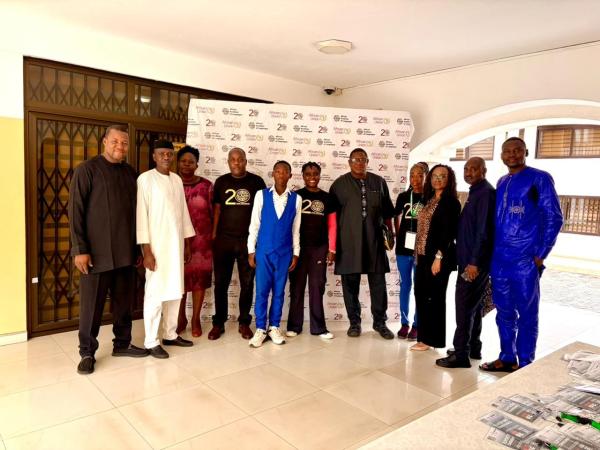
Strategic coordination of Africa Languages Week 2026 was led by the Africa Languages Week Coordinating Committee (ALWCC), chaired by Ms. Margaret Nankinga. Committee members included Prince Cletus Sunday Ilobanafor, Founder and Managing Director of CEOAFRICA; Mr. John Rusimbi; Dr. Babusa Omar Hamisi; Mr. Anicet Allamadjingaye; and Ms. Francina Nutifafa Feyi. Their engagements focused on advocacy, visibility, indigenous leadership, and partnerships within Africa’s cultural and creative sectors. Institutional support was provided by Ms. Odile Nzirabatinya, Finance Officer, and Mr. Modibo Diallo, Secretary of the ACALAN Secretariat.
Participants also examined the persistent linguistic imbalance on the continent, noting that although colonial languages such as English and French dominate official communication, they are fluently spoken by only about 40 percent of Africans, leaving more than 600 million people excluded from effective participation in development processes. ACALAN is addressing this gap through the instrumentalisation of African languages, which involves developing technical terminology and standardized vocabularies for use in sectors such as water and sanitation, health, governance, and public administration.
Former ACALAN Senior Programme and Project Officer Dr. Babajide Ojo Johnson highlighted the importance of media literacy, critical thinking, and entrepreneurship education delivered through African languages. He stressed that linguistic empowerment is central to achieving Agenda 2063, the African Union’s long-term development blueprint, and called for institutional reengineering to enable ACALAN to meet emerging challenges over the next two decades.
During the working sessions, Ms. Nankinga presented a proposal on advocacy for African languages, while Prince Ilobanafor outlined strategies for improving the visibility and valorization of African languages, urging Africans to partner with ACALAN to expand the use of indigenous languages across all domains of life. Mr. Rusimbi presented on the development of artificial intelligence tools for African languages, while Dr. Hamisi proposed the use of animation and cartoons to promote early language learning among children.
The working group further emphasized the need for adaptive governance frameworks that respond to emerging technologies, ensuring African languages remain relevant in the era of digital transformation and artificial intelligence.
As Africa Languages Week 2026 concluded at the University of Ghana, Legon, stakeholders began preparations for the historic 20th anniversary celebrations, which will be implemented as a year-long programme running from September 2026 to 2027. Participants said the initiative reflects a renewed commitment to reclaiming and repositioning African languages as central pillars of culture, social cohesion, and sustainable development, in line with the African Union’s vision of “the Africa we want.”