



The Federal Government is considering the reintroduction of tollgates fitted with modern surveillance technology to strengthen security on Nigerian highways and tackle kidnapping, banditry and other criminal activities.
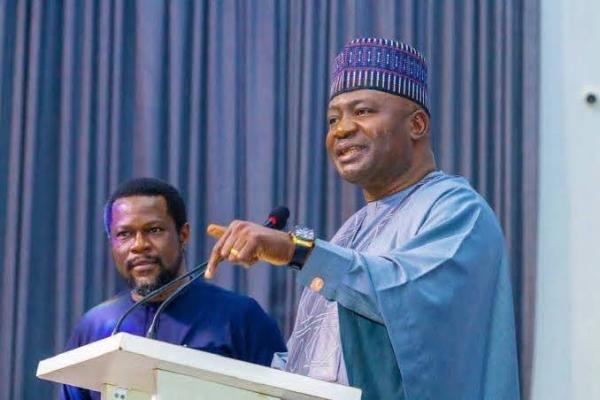
Minister of Defence, Christopher Musa, disclosed this while speaking at an event organised by the All Progressives Congress (APC) and convened by Ismaeel Ahmed, Executive Chairman and Chief Executive Officer of the Presidential Initiative on Compressed Natural Gas and Electric Vehicles (PiCNG & EV).
The event, themed “Promise to Proof: The Renewed Hope Conversation,” focused on government policies and efforts to address challenges confronting the country.
Musa said the proposed tollgates would function beyond revenue collection centres, serving as strategic security checkpoints equipped with technology to identify, monitor and track vehicles without necessarily requiring motorists to stop for manual payments.
Reacting to suggestions that motorists could contribute to highway security through tollgate payments, the minister supported the idea, admitting that the decision to dismantle tollgates in the country might have been a mistake.
He, however, emphasised that any reintroduction must be supported by modern technology capable of recognising vehicle registration numbers and facilitating electronic payments.
The minister also called for a strengthened national identification system incorporating Personal Identification Numbers, facial recognition and fingerprint technology to assist security agencies in identifying individuals and tracking criminal networks.
Addressing the military's prolonged involvement in internal security operations, Musa acknowledged that continuous deployments across the country had placed considerable demands on the armed forces beyond their conventional responsibilities.
He said the government was working towards a gradual withdrawal of the military from internal security operations by strengthening the Nigeria Police Force (NPF) to assume greater responsibility for maintaining internal security.
According to him, the military is already providing training, operational support and other capacity-building assistance to the police, while the government is pursuing additional recruitment and equipment procurement.
Musa disclosed that N5.4 trillion had been earmarked for defence in the 2026 budget, with plans to recruit an additional 12,000 personnel to strengthen the country's security architecture.
He explained that the funding would facilitate the acquisition of modern weapons, surveillance equipment and operational platforms to enhance intelligence gathering, mobility, firepower and rapid response.
Giving an update on recent security operations, the minister said troops had killed more than 300 terrorists and bandits, including over 10 commanders, during operations carried out in the week preceding his presentation.
He attributed the reported achievements to improved intelligence gathering, coordinated military operations and increased collaboration among security agencies.
The minister, however, identified porous borders as a significant obstacle to addressing insecurity, particularly Nigeria's extensive borders with neighbouring countries, including the Niger Republic, which he said provided opportunities for criminal groups and arms traffickers to move across the region.
Despite the withdrawal of Niger, Burkina Faso and Mali from the Economic Community of West African States (ECOWAS), Musa said Nigeria had sustained security relationships with the three countries, particularly in military training and cooperation around border communities.
On strengthening indigenous defence production, he said the Federal Government had intensified efforts to develop Nigeria's defence industry through legislative reforms and partnerships with equipment manufacturers.
He encouraged Nigerians with expertise in cybersecurity, drone production and other defence-related technologies to approach the Defence Industries Corporation of Nigeria (DICON) with their innovations for possible collaboration.
Musa also called on citizens to support the fight against insecurity by remaining vigilant and promptly reporting suspicious activities in their communities to relevant security agencies.