



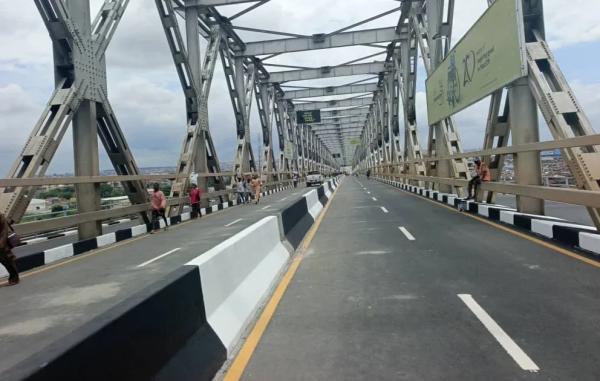
The Federal Ministry of Works has said the First Niger Bridge linking Onitsha, Anambra State, with Asaba, Delta State, may reopen to traffic before the end of this week, following the completion of major rehabilitation works.
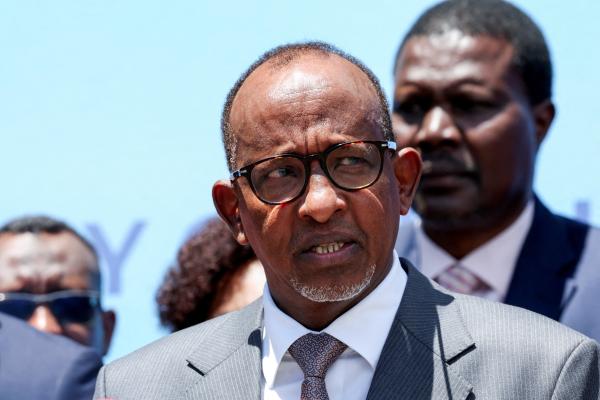
The Federal Controller of Works in Anambra State, Timothy Emenike, gave the assurance on Wednesday while speaking with journalists on the progress of work on the bridge and clarifying reports concerning openings created along its newly installed demarcation.
The 61-year-old bridge was closed to traffic on September 7 following the discovery of vandalised structural components, including parts of its expansion-joint steelwork.
The closure was initially scheduled to last until September 21 but was extended by one week because of persistent rainfall and other unforeseen circumstances.
However, during an inspection of the bridge on September 23, the Minister of Works, Dave Umahi, said the facility would remain closed until critical structural rehabilitation works were completed.
Umahi had insisted that the Federal Government would not reopen the bridge under pressure until the identified structural defects had been properly addressed.
“We are not going to be stampeded to open the bridge until the major structural work has been achieved,” the minister said at the time.
But Emenike said on Wednesday that the major construction activities had been completed, with only finishing works and some supporting infrastructure remaining.
According to him, the bridge has been tarred and asphalted, while the expansion bolts and other critical structural components have been fixed.
He said the ongoing painting of the railings and installation of solar lighting infrastructure were among the final activities being undertaken ahead of reopening.
“The railing-painting exercise, which began last week, is expected to be completed shortly. Barring unforeseen circumstances, the bridge could be reopened before the end of the week,” Emenike said.
He added that the remaining works were mainly finishing and safety-related installations, stressing that the rehabilitation was aimed at improving the safety of road users and restoring the free flow of traffic.
“All construction works that have to do with road tarring, laying of asphalt, fixing of expansion bolts and other critical components have been completed. The bolts for the solar light poles are being fixed,” he said.
The closure of the bridge had forced motorists and commuters to rely largely on the Second Niger Bridge and alternative inner routes, resulting in longer travel times, increased transport costs and additional pressure on available routes.
Meanwhile, Emenike dismissed reports that the newly installed brick demarcations on the bridge had been removed or destroyed.
He accused some individuals of circulating fake photographs on social media in an attempt to discredit the ministry and mislead the public.
“The alleged removal of the brick demarcation that was installed after the bridge rehabilitation is one of the lies some disgruntled elements are telling and posting with fake pictures on social media to discredit the ministry and deceive the public,” he said.
The controller explained that the demarcations remained intact, except at designated openings created to allow emergency U-turns.
He, however, could not confirm whether photographs of President Bola Tinubu would be installed on the bridge before its reopening, as directed by Umahi during his inspection visit.
The expected reopening has generated relief among motorists, commuters and businesses in Onitsha, who have endured disruptions since the bridge was closed.
An Onitsha-based motorist, Uche Adieme, said reopening the bridge would help ease congestion and improve the movement of people and goods within and around the commercial city.
He said the diversion of traffic to the Second Niger Bridge had provided an alternative route but increased pressure on other roads.
According to him, restoring the First Niger Bridge to full operation would help distribute traffic more efficiently and reduce the additional travel time and logistics costs experienced by commuters and businesses.
“Onitsha is a major trading and distribution centre, and efficient road connectivity is important for the movement of goods, workers and consumers. Any disruption to major transport links can increase travel times and raise logistics costs for businesses,” he said.