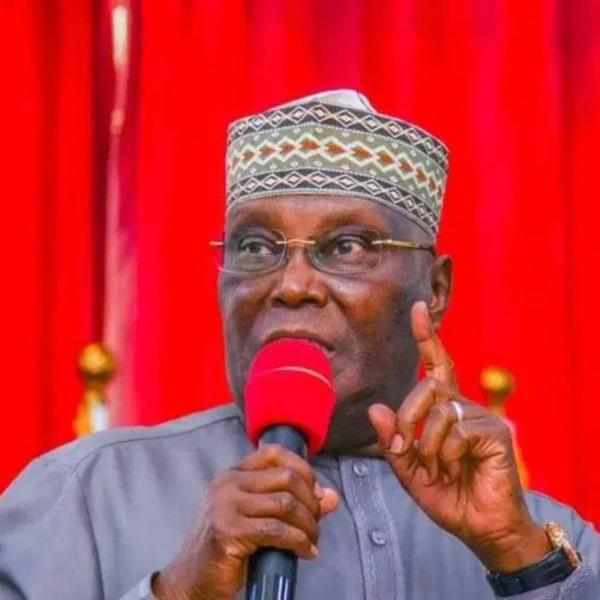





Former Vice-President Atiku Abubakar has urged President Bola Tinubu to increase Nigeria’s minimum wage, arguing that the current ₦70,000 wage floor is inadequate amid rising costs of living.
Atiku, the presidential candidate of the African Democratic Congress (ADC), also supported organised labour’s demand for a substantial increase in workers’ pay.
In a statement issued on Sunday by Phrank Shaibu, Director of Strategic Communications of the ADC Presidential Campaign Council, Atiku criticised the Tinubu administration over the economic impact of petrol subsidy removal.
According to him, the policy has contributed to higher petrol and transportation costs, while increasing the prices of food and other essential commodities.
“The government pulled away the floor, offered workers a flimsy umbrella and now applauds itself while the rain beats down on them,” Atiku said.
He argued that the increase in the minimum wage from ₦30,000 to ₦70,000 had failed to restore workers’ purchasing power.
“At ₦1,400 a litre, the entire ₦70,000 monthly minimum wage buys just 50 litres of petrol,” he said.
Atiku noted that Nigeria’s national average petrol price stood at ₦254.06 per litre in April 2023, when the ₦30,000 minimum wage could purchase approximately 118 litres.
He said the situation had changed significantly, with the current ₦70,000 wage buying only about 50 litres at ₦1,400 per litre.
“The payslip has grown, but the fuel it can buy has more than halved. Tinubu has given workers a larger number and left them with a smaller life. That is hardship dressed up as a wage increase,” he said.
Atiku also compared Nigeria’s minimum wage with those of other African and oil-producing countries, citing figures that he said showed higher wage equivalents in Libya, Algeria, Equatorial Guinea and Gabon.
Using exchange rates from July 24, 2026, he put the equivalent monthly minimum wages at approximately ₦213,000 in Libya, ₦245,000 in Algeria, ₦302,000 in Equatorial Guinea and ₦351,000 in Gabon. He also said Benin Republic’s minimum wage was higher than Nigeria’s when converted using the cited exchange rates.
While acknowledging differences in wage structures and living costs across countries, Atiku maintained that ₦70,000 was insufficient for Nigerian workers facing rising prices.
“The Nigerian worker is the engine of this country’s productive life, yet Tinubu expects that engine to run without fuel,” he said.
He further argued that higher petrol prices affect more than transportation, as increased energy and logistics costs contribute to rising food and other household expenses.
“Petrol does not stay at the pump. Its price follows the farmer to market, enters the baker’s oven and appears in the fare a parent pays to take a child to school,” Atiku said.
He called on President Tinubu to approve a substantial increase in the minimum wage to reflect the prevailing costs of food, transportation, rent and power.