



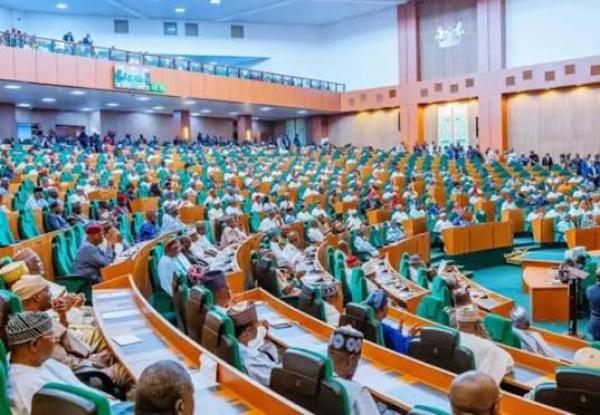
The House of Representatives has commenced debate on a bill seeking to establish the National Commission for Rural Infrastructure and Development (NACRID), a proposed agency aimed at coordinating and financing infrastructure development across Nigeria's rural communities.
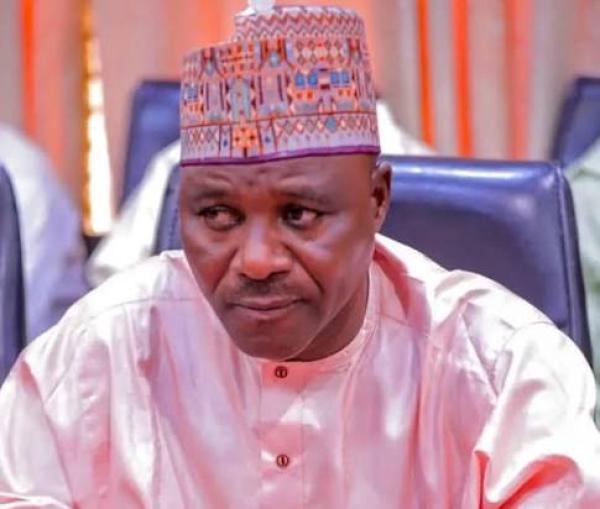
Leading the debate on the general principles of the bill during Wednesday's plenary, the sponsor, Hon. Saidu Abdullahi (APC, Niger), argued that Nigeria cannot achieve sustainable economic growth while millions of people living in rural areas remain without access to basic infrastructure and economic opportunities.
Abdullahi described rural development as "a strategic economic priority" rather than merely a social intervention, stressing that rural communities remain the backbone of Nigeria's agricultural production and natural resource base despite suffering the country's largest infrastructure deficit.
"No nation can attain sustainable economic growth while neglecting the communities that produce its food, supply its raw materials and sustain its local economy. Rural development must therefore be regarded not merely as a social obligation but as a strategic economic priority," he said.
The proposed legislation, House Bill 2795, which passed first reading on July 9, 2026, seeks to establish a National Rural Development Fund to provide sustainable financing for infrastructure projects in rural communities nationwide.
According to the lawmaker, the proposed commission would serve as a central institution responsible for financing, coordinating, monitoring and supporting rural infrastructure programmes across the federation.
He explained that while existing Ministries, Departments and Agencies (MDAs) oversee sectors such as roads, agriculture, water resources, education, health and power, no single institution currently coordinates rural infrastructure development at the national level.
"The proposed commission is therefore not intended to replace or duplicate the statutory functions of existing Ministries, Departments and Agencies. Rather, it is designed to complement and strengthen their efforts by providing a unified institutional framework for financing, coordination, policy guidance, monitoring, technical assistance and performance evaluation," Abdullahi stated.
Drawing comparisons with intervention agencies such as the Tertiary Education Trust Fund (TETFund) and the Universal Basic Education Commission (UBEC), he said NACRID would focus primarily on financing, coordination and oversight rather than direct project execution.
Under the proposed framework, infrastructure projects would be implemented by State Rural Infrastructure and Development Boards or designated state agencies through a counterpart funding model similar to that used by UBEC.
State governments would be required to prepare Rural Development Action Plans, provide counterpart funding, execute approved projects and account for the utilisation of intervention funds.
Abdullahi said the arrangement would strengthen accountability, encourage state ownership and foster collaboration among the three tiers of government.
The proposed Rural Development Fund would draw funding from federal appropriations, grants, development partners, private sector contributions, state counterpart funding, investment income and other lawful sources approved by the National Assembly.
The bill also proposes funding from appropriated portions of the Value Added Tax (VAT) pool, Federal Government returns from the Sovereign Wealth Fund and other sovereign investment vehicles, as well as proceeds from assets permanently forfeited in corruption-related cases, subject to legislative approval.
The sponsor assured lawmakers that parliamentary oversight would remain intact, noting that all funding sources would still require appropriation by the National Assembly.
Abdullahi anchored the proposal on Sections 14(2)(b) and 16(2)(d) of the 1999 Constitution, which mandate government to ensure citizens' welfare and provide infrastructure that improves living standards.
He also referenced the defunct Directorate of Food, Roads and Rural Infrastructure (DFRRI), established in 1986, saying that although the agency faced funding and institutional challenges, it demonstrated the transformative impact of targeted investments in rural communities.
Unlike DFRRI, he noted, the proposed commission would operate on "modern principles of transparency, accountability, intergovernmental collaboration, sustainable financing, digital monitoring and legislative oversight."
The lawmaker further cited South Korea's Saemaul Undong rural transformation programme as evidence that coordinated government support, community participation and sustained investment can significantly reduce rural poverty and bridge the urban-rural development gap.
He added that countries including India, China, Brazil, Indonesia, South Africa and the United States have adopted similar institutional frameworks to promote rural development.
If passed into law, NACRID would support investments in rural roads, bridges, potable water, sanitation, renewable energy, irrigation systems, healthcare facilities, schools, digital connectivity, markets, storage facilities and agro-processing centres.
According to Abdullahi, the initiative would boost agricultural productivity, strengthen food security, create jobs, attract private investment and reduce rural-to-urban migration.
"This bill is not merely about creating another commission. It is about creating a national institution dedicated to ensuring that rural communities receive the infrastructure, investments and opportunities necessary for sustainable development," he said.
He urged lawmakers to support the bill by allowing it to pass second reading and proceed to the committee stage for detailed legislative scrutiny and stakeholder consultations.
If eventually enacted, NACRID is expected to operate under a financing and oversight model similar to TETFund and UBEC while relying on state governments to implement projects through counterpart funding arrangements.