



The Federal Government has reduced the fees for textbook assessment and ranking and directed the refund of excess payments made by publishers, in a move to ease the financial burden on stakeholders ahead of the implementation of the National Textbook Ranking System.
The Nigerian Educational Research and Development Council (NERDC) announced the decision in a statement signed by its Executive Secretary, Prof. Salisu Shehu, and released on Wednesday in Abuja.
According to the statement, the assessment fee has been reduced from ₦2,000 to ₦1,500 per page, while the ranking fee has been slashed from ₦1 million to ₦750,000 per textbook title.
Prof. Shehu said the revised charges take immediate effect and are designed to support publishers and authors participating in the new textbook evaluation process.
He further disclosed that publishers who had already paid the former assessment fee of ₦2,000 per page would receive refunds of the excess amount paid.
“Publishers who had already paid the previous assessment fee of ₦2,000 per page will receive refunds of the excess payment, while the procedure for processing the refunds will be announced soon,” the statement read.
NERDC also directed publishers and authors submitting textbooks for assessment to begin making payments based on the new rates with immediate effect and urged stakeholders across the publishing industry to comply with the revised fee structure.
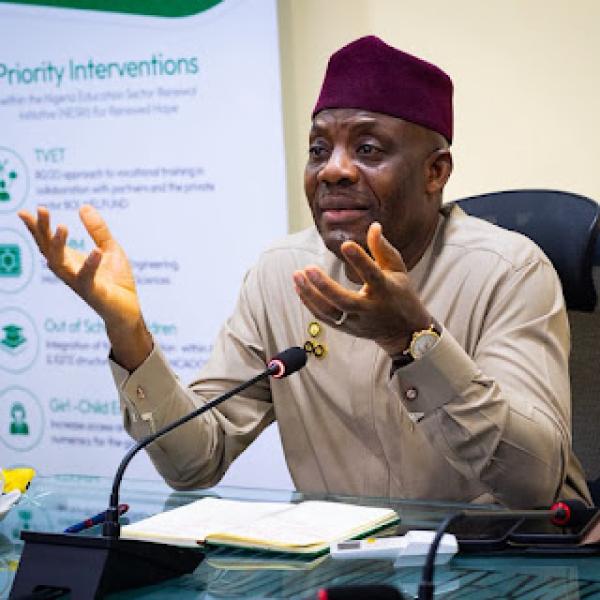
The reduction comes as the Federal Government prepares to roll out the National Textbook Ranking System, a major education reform introduced by the Minister of Education, Dr. Tunji Alausa, to improve the quality of instructional materials used in Nigerian schools.
Under the new policy, which takes effect in **September 2026**, only textbooks that have been assessed, approved and ranked by NERDC will be authorised for classroom use. Textbooks that fail to obtain the required ranking will no longer be permitted in schools.
Speaking when the initiative was unveiled, Alausa said the policy is aimed at eliminating substandard textbooks and ensuring that learners and teachers have access to high-quality, curriculum-compliant educational materials.
He explained that while NERDC would continue to perform its statutory responsibility of approving textbooks, approval alone would no longer qualify a book for classroom use. Every approved textbook must undergo a comprehensive national evaluation and ranking by expert committees before it can be recommended for schools.
The National Textbook Ranking System is one of the flagship reforms being implemented by the Federal Ministry of Education under the Renewed Hope Agenda to strengthen the quality of basic and secondary education.
In addition to the ranking system, the ministry has introduced nationwide learning assessments, revived abandoned e-libraries in Unity Colleges, expanded digital learning infrastructure, and rolled out measures to tackle learning poverty, which the government estimates affects about 42 million Nigerian children.