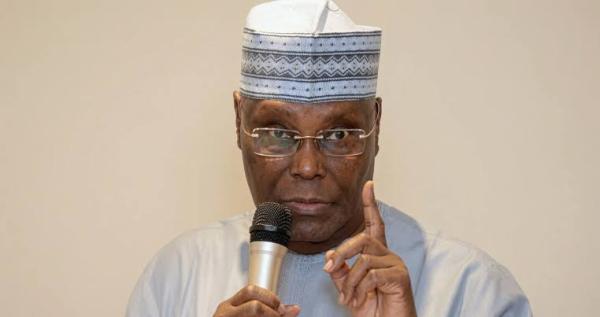




Former Vice President Atiku Abubakar has given President Bola Ahmed Tinubu seven days to either sign the Federal Audit Service Bill into law or formally notify the National Assembly of his decision to withhold assent, in line with the provisions of the 1999 Constitution (as amended).
Atiku warned that if the president fails to take either action within the stipulated period, he should resign from office.
In a statement issued on Friday through his Senior Special Assistant on Public Communication, Phrank Shaibu, the former vice president accused Tinubu of violating the Constitution by failing to act on the bill several months after it was transmitted by the National Assembly.
According to Atiku, the president's continued delay undermines democratic governance, weakens public accountability, and raises serious concerns about respect for constitutional provisions.
"Nigerians deserve clarity, not silence. The Constitution neither authorises executive inaction nor contemplates indefinite presidential delay. Continued failure to act only reinforces public concern that constitutional obligations are increasingly being subordinated to executive convenience," the statement said.
Referring to Section 58(4) of the Constitution, Atiku noted that the president is constitutionally required to either assent to or withhold assent from any bill presented by the National Assembly within 30 days.
"That provision is neither decorative nor discretionary. It is a constitutional command. The framers of our Constitution never envisaged a president who would simply sit on legislation indefinitely while governance drifts without certainty or accountability," he stated.
The Federal Audit Service Bill seeks to strengthen the independence of the Office of the Auditor-General for the Federation, modernise Nigeria's public audit system, improve oversight of government spending, and align the country's audit framework with international best practices.
Atiku argued that delaying action on legislation intended to enhance transparency and accountability sends the wrong signal at a time when Nigerians are demanding stronger institutions and prudent management of public resources.
He further alleged that the president's failure to act reflects a broader pattern of constitutional disregard by the current administration.
"Every major scandal begins with a smaller act of institutional neglect. It begins when constitutional provisions are treated as optional, when oversight institutions are weakened and when those entrusted with enforcing the law become comfortable operating outside its clear boundaries," he said.
The former vice president also cited the controversy surrounding the proposed Presidential Foreign Intervention Promotion Council, saying it demonstrated the dangers of weak institutional safeguards and inconsistent official communication.
"The Constitution is one indivisible covenant. A president who treats one constitutional obligation as optional inevitably weakens respect for every other constitutional safeguard. That is how impunity gradually becomes institutional culture and governance descends into perpetual crisis management rather than responsible leadership," Atiku added.
He maintained that constitutional democracy cannot thrive where leaders obey the law selectively.
"The same Constitution that confers enormous powers on the president also places clear obligations upon him. Executive authority is not a licence for constitutional indifference. A president who expects citizens to obey the law must himself be the foremost example of obedience to the Constitution," he stated.
Section 58(5) of the Constitution provides that where the president withholds assent to a bill, the National Assembly may override the decision if the legislation is passed again by a two-thirds majority of both the Senate and the House of Representatives.
The Federal Audit Service Bill is designed to reform Nigeria's public audit framework by strengthening the institutional and financial independence of the Office of the Auditor-General, enhancing oversight of public expenditure, and promoting greater transparency in the management of public funds.
As of the time of filing this report, the Presidency had not responded to Atiku's remarks.