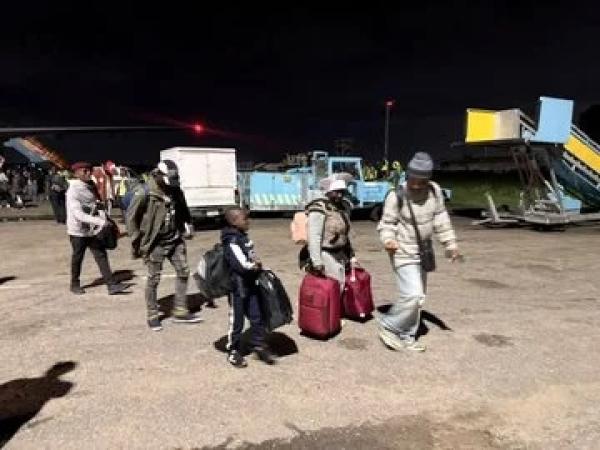




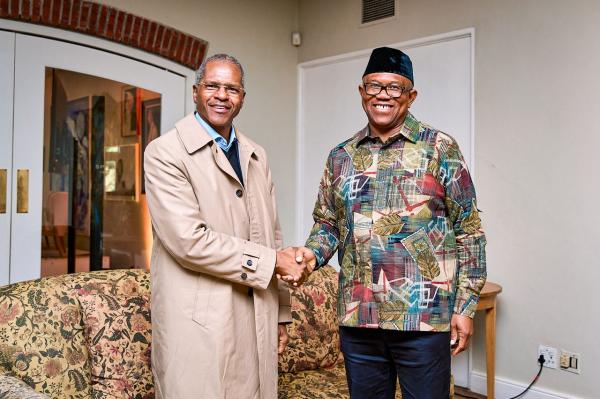
Former Anambra State Governor, Peter Obi, has expressed concern over the worsening plight of Nigerians living abroad, revealing that many citizens facing xenophobic attacks in South Africa would rather remain there than return to Nigeria.
Obi made the remarks on Monday during a dinner organised for aspirants of the National Democratic Coalition (NDC) in Abuja, shortly after returning from South Africa.
According to a statement issued on Tuesday by the NDC media team, the former presidential candidate said efforts were made to facilitate the return of distressed Nigerians from South Africa, but many declined the offer, citing harsh economic and social conditions back home.
“I just came back last night from South Africa. You know what Nigerians are going through in South Africa and many other African countries,” Obi said.
“I addressed Nigerians there and told them that if things were working properly in our country, most of them would not have left in the first place.
“We made arrangements for some of them to return home, but many told me they would rather die there than come back to Nigeria because conditions at home are even worse.”
Obi disclosed that during his visit, he held discussions with political leaders, including former South African President Thabo Mbeki, on improving relations between South Africans and other African nationals.
“I met with three ministers who are leaders of their respective political parties to discuss ways of strengthening relations between South Africans and other Africans, and we had fruitful engagements,” he added.
The former governor also criticised the Federal Government for what he described as inadequate support for Nigerians facing difficulties abroad.
“It is not only in South Africa that Nigerians are experiencing challenges; similar issues exist in other countries. I have spoken with leaders in some of these countries and asked whether the Nigerian government had reached out to its citizens there, and the answer was no,” Obi stated.
“If your country does not stand for you, who will?”
He further lamented Nigeria’s deteriorating security situation despite the country’s long-standing role in international peacekeeping missions.
“Nigeria once played major roles in maintaining peace across nations and commanded United Nations peacekeeping operations globally. Today, however, Nigeria cannot adequately secure itself. That is unacceptable,” he said.
Meanwhile, NDC National Leader, Seriake Dickson, explained why the party could not implement electronic voting during its primaries as earlier proposed.
Dickson said the digital voting platform and application had been developed but required further testing to prevent technical failures.
“Going forward, and certainly before the next round of elections, every registered voter in the NDC will be able to vote using their mobile phones,” he said.
“That is the direction Nigeria’s electoral system should also be heading, and the NDC intends to lead by example.”
He added that the NDC was being built as an ideological and service-driven political platform, rather than “a special purpose vehicle for any individual.”
Also speaking at the event, former Secretary of the Board of Trustees of the New Nigeria People’s Party (NNPP), Buba Galadima, urged aspirants who may not secure party tickets to remain committed to the party.
“The timeline imposed by the APC government through the National Assembly is not favourable to the NDC,” Galadima said.
“Where there are multiple aspirants in a constituency, only one person will eventually emerge as the party’s candidate, and others must remain loyal to the collective cause.”