



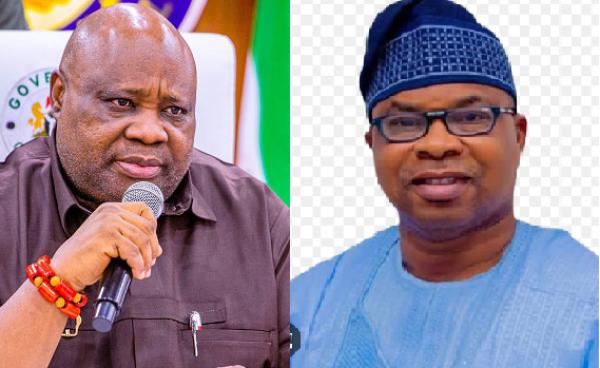
In the countdown to Osun State’s 2026 governorship election, a high-stakes battle is emerging between Governor Ademola Adeleke’s rare grassroots appeal and the well-oiled political machinery of the All Progressives Congress (APC) candidate, Munirudeen Bola Oyebamiji. As analysts debate whether popularity alone can withstand federal-backed structure, the contest is shaping up to be a defining test of what truly drives electoral success in modern Nigeria. SOLA SHITTU writes.
In Osogbo’s bustling markets, crowded motor parks and roadside bukas, Governor Ademola Adeleke still commands a rare kind of political affection. Mention his name in many parts of Osun State and the response is often emotional rather than merely partisan. To admirers, he remains the dancing governor who broke the long dominance of the All Progressives Congress in 2022 and brought a populist touch to governance.
But as the countdown to the August 2026 governorship election gathers momentum, a more complicated political reality is emerging. Standing across from Adeleke is the growing force of the All Progressives Congress (APC) candidate, Munirudeen Bola Oyebamiji, popularly known as AMBO, backed by a party structure determined to reclaim one of the Southwest’s most politically symbolic states.
The coming battle is shaping up to be more than an ordinary governorship contest. Political observers increasingly describe it as a direct confrontation between grassroots emotional appeal and the enormous influence of federal political machinery.
For many analysts, the question is no longer whether the election will be fiercely contested. The real question is whether popularity alone can withstand the pressure of a coordinated political structure backed by the ruling party at the centre.
Adeleke enters the race with perhaps the strongest personal connection to ordinary voters in Osun politics today. Since his emergence on the political stage, he has successfully built an image of accessibility and simplicity that resonates deeply with artisans, traders, transport workers and young people. His style differs sharply from the elite technocratic image traditionally associated with many Nigerian politicians.
That emotional bond became evident during the 2022 governorship election when voters, particularly youths and low-income residents, rallied massively behind him. Many saw his victory not merely as a partisan triumph but as a rebellion against perceived political arrogance and internal divisions within the APC at the time.
Nearly four years later, that street connection still appears largely intact. Across major towns including Ede, Ikirun, Ilesa and Osogbo, Adeleke continues to attract crowds with relative ease. His social media visibility, unconventional communication style and public appearances have helped sustain his populist image even among non-PDP supporters.
Some residents also point to ongoing infrastructure projects and salary payments under his administration as evidence that the governor has not entirely disappointed his support base.
“A lot of people still like Adeleke because they see him as humane,” said a trader at Alekuwodo Market in Osogbo. “He behaves like somebody ordinary people can approach.”
Yet politics in Nigeria is rarely decided by popularity alone. The APC appears to have learnt painful lessons from its 2022 defeat. That election exposed the destructive consequences of internal fragmentation within the party, especially the conflict involving former governor Rauf Aregbesola and the camp loyal to former governor Gboyega Oyetola. This time, the party seems more deliberate about reconciliation and rebuilding.
AMBO’s emergence is part of that strategy. Though not as charismatic as Adeleke, Oyebamiji is widely viewed within APC circles as a disciplined technocrat with deep connections to the party establishment. His candidacy also enjoys strong support from influential figures within the Southwest APC bloc aligned with President Bola Ahmed Tinubu.
For the APC, Osun is not just another governorship election. It is a prestige battle. Losing Osun in 2022 *weakened the APC’s* psychological hold on the Southwest and emboldened opposition forces in the region. Reclaiming the state would therefore carry symbolic and strategic importance ahead of the broader calculations for the 2027 general election.
That explains why federal influence is expected to play a major role in the coming contest.
In Nigeria’s off-cycle governorship elections, incumbency at the federal level often shapes outcomes through political negotiations, elite alignments, security coordination and party mobilisation capacity. From Ekiti to Ondo and Edo, recent elections have demonstrated how difficult it can be for opposition parties to withstand a united ruling party structure backed from Abuja.
Several APC insiders believe the party now possesses stronger organisational discipline than it did in 2022. “We made costly mistakes during the last election,” said an APC chieftain in Osun. “This time, the party is more united and more focused.”
Still, the APC faces its own challenges. One of the biggest uncertainties remains the political influence of Aregbesola. Though his relationship with the APC leadership deteriorated sharply after the 2022 election, his grassroots structure, especially among loyalists in parts of Osun West and Osun Central, remains significant.
Aregbesola’s political machinery was widely believed to have contributed to the APC’s defeat in the last governorship poll after many of his supporters either worked against the party or refused to mobilise fully for its candidate.
Now, there are growing indications that sections of his political network may be gradually returning to the APC fold, though the reconciliation remains incomplete.
If the APC successfully reunites its major factions before the election, Adeleke could face a far more formidable opposition than he encountered four years ago.
Another factor complicating the race is the reported uncertainty surrounding Adeleke’s broader political platform and the internal weaknesses facing the PDP in Osun.
While the governor remains personally popular, some analysts warn that party instability can become dangerous during high-stakes elections. Defections, legal disputes and leadership struggles within opposition parties have historically weakened electoral momentum in Nigeria.
Political scientist Dr. Kunle Adebayo argues that the election may ultimately depend on organisation rather than emotion.
“Street popularity is important, but elections require structure,” he said. “You need polling agents, mobilisation networks, elite coordination, financial strength and institutional capacity. APC understands this game very well.”
Yet Adeleke’s supporters insist analysts are underestimating the emotional depth of his support. Unlike many politicians whose popularity exists mainly online or within elite circles, Adeleke’s appeal cuts across demographics. His persona blends entertainment, accessibility and political symbolism in ways few Nigerian governors have achieved.
To many young voters especially, he represents an unconventional break from traditional political elitism. That may become crucial in a state where voter psychology often differs from broader national patterns.
Osun has historically displayed a fiercely independent political culture. Unlike some states where voting patterns follow rigid party structures, Osun voters have repeatedly demonstrated a willingness to punish incumbents or disrupt elite expectations.
Former governors including Olagunsoye Oyinlola, Rauf Aregbesola and Gboyega Oyetola all experienced the unpredictable nature of Osun politics at different moments. The 2022 election itself served as proof that even a ruling party with federal backing can lose when internal divisions combine with strong public dissatisfaction.
This is why many analysts caution against assuming that the APC’s federal advantage automatically guarantees victory. Indeed, one of Adeleke’s strongest assets may be perception.
For many ordinary residents, he is still seen as a governor who enjoys himself publicly without appearing hostile or distant from the people. His critics often dismiss his dancing and social media style as not serious, but supporters interpret the same behaviour as authenticity. That contrast could become one of the defining psychological battles of the campaign.
The APC is likely to frame the election around competence, structure, economic management and alignment with federal power. Adeleke’s camp, on the other hand, may seek to portray the contest as a battle between ordinary people and entrenched political forces seeking to reclaim control of the state.
Already, subtle campaign narrative arguments are beginning to emerge from both sides. Within APC circles, there is growing emphasis on the need to “return Osun to the progressive family.” Supporters argue that closer alignment with the federal government would accelerate Ede infrastructure development and political access for the state. Adeleke’s loyalists reject that entirely. They insist Osun voters are more concerned about local governance realities than elite political calculations in Abuja.
“People are not voting because of federal connection,” said a youth leader. “They will vote for who they feel comfortable with.”
Security and voter turnout may also become decisive factors. Historically, off-cycle elections in Nigeria tend to witness lower turnout than presidential contests. In such situations, party structure and mobilisation efficiency often become more important than broad popularity.
That reality could favour the APC if it succeeds in fully rebuilding its statewide machinery before Election Day. However, if Adeleke maintains enthusiasm among urban youths, artisans and grassroots communities, the race could become far tighter than APC strategists anticipate.
Another important variable is the economy. Nigeria’s difficult economic conditions may influence voter behaviour in unpredictable ways. Rising living costs, inflation and unemployment could either weaken the ruling APC’s broader appeal or strengthen arguments that states should align politically with the centre for economic advantage.
Much may depend on how effectively both camps frame the election narrative. For now, neither side appears ready to underestimate the other.
Behind the public confidence displayed by party loyalists lies growing recognition that Osun 2026 may become one of the toughest governorship battles in recent southwest political history.
The stakes extend beyond Osun itself. Adeleke’s victory would strengthen opposition morale nationally and reinforce the argument that charismatic grassroots politics can still overcome institutional dominance.
An APC victory, however, would deepen the ruling party’s hold on the Southwest and further consolidate President Tinubu’s political influence heading towards 2027.
As campaign activities gradually intensify, one thing is becoming increasingly clear: the Osun governorship election will not merely be a local contest between two candidates.
It is evolving into a broader political test of what truly determines electoral success in contemporary Nigeria — emotional connection with voters or the overwhelming power of political structure. And in that battle between the streets and the system, Osun may once again deliver surprises.