



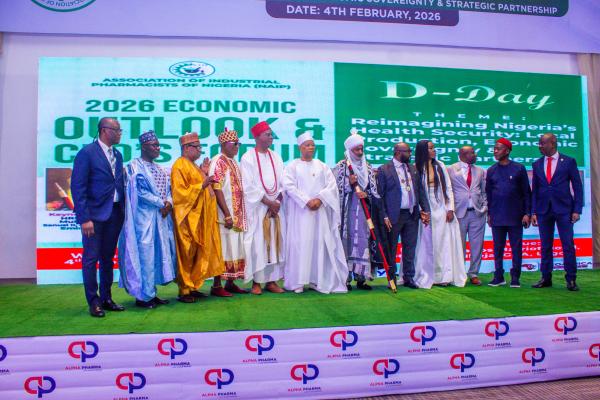
February 4, 2026 marks a significant milestone for the future of Nigerian healthcare as the Association of Industrial Pharmacists of Nigeria (NAIP) received the full backing of a powerful royal and political mandate to transform the nation's drug security. Prominent traditional rulers, health icons, and industrial leaders joined forces at the Lagos Marriott Hotel, Ikeja, on Wednesday, February 4, 2026, to urge the Federal Government to accelerate its goal of achieving 70 percent local drug production by 2030.
Welcoming delegates to the 2026 NAIP Economic Outlook and CEOs Forum, the Chairman of the Conference Planning Committee (CPC), Pharm. Ameh Eghomwanre, described the event as a "solutions-focused platform". He emphasized that the industry is prepared to invest and generate jobs but requires clear policies and consistent access to foreign exchange to thrive.
Giving the wake-up call at the 2026 NAIP Economic Outlook and CEOs Forum, themed “Reimagining Nigeria’s Health Security: Local Production, Economic Sovereignty & Strategic Partnership,” stakeholders gathered for a "strategic reset" of the Pharmaceutical landscape anchored on ethical leadership and massive investment. The high-level assembly was held under the Distinguished Chairmanship of His Royal Majesty Igwe Nnaemeka Alfred Achebe (CFR, mni), the Obi of Onitsha (Agbogidi).
The President of the Pharmaceutical Society of Nigeria (PSN), Pharm. Ayuba Tanko Ibrahim, who is the Chief Host of the historical event expressed his profound satisfaction with the leadership of NAIP National Chairman, Pharm. (Sir) Bankole Ezebuilo. He noted that while previous administrations laid a solid foundation, the present executive has demonstrated exceptional leadership that will elevate the association to greater heights.
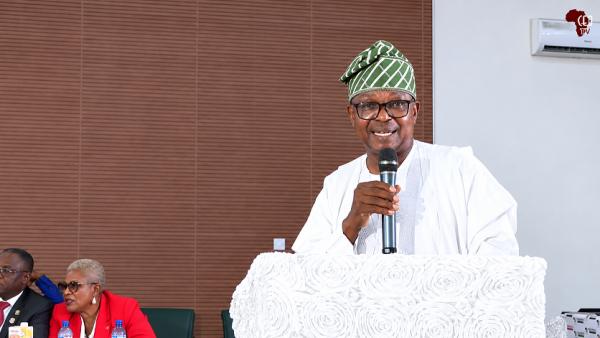
In assessment of the sector, the Keynote Speaker, Mallam Muhammadu Sanusi II (CON, PhD), the Emir of Kano, revealed that 70 percent of the drugs used in Nigeria are imported, with 82 percent of those imports originating from a single source, India. Describing this concentration as bad news for national security, he called for urgent political engagement to establish local plants, aiming to ensure the Pharmaceutical Industry in Nigeria becomes self-sufficient to boost the domestic supply chain. The urgency of this transformation was further underscored by the Obi of Onitsha, who warned that a country depending excessively on external sources for its medical supplies places "not only the health of the people at risk but also its economy sovereignty and resilience."
His Royal Highness, Pharm Dr Alex ONYODO ,Igwe Ogidi of Ogidi Land who also joined the call Federal Government support.
This sentiment was reiterated by the "Father of Pharmacy in Nigeria ," Prince Julius Adelusi-Adeluyi,, Former Minister of Health who remarked that the "pharmacy profession is punching below its weight" and suggested that pharmacists are currently "expressing less gravitas than they have," urging them to project the true power of their profession to drive meaningful change.
A historic assembly of authorities supported the call, including Hon. Uchenna Harris Okonkwo, Member of the Federal House of Representatives and Deputy Chairman of the House Committee on NAFDAC, whose presence signaled legislative commitment to the cause. They were joined by the Registrar of the Pharmacy Council of Nigeria, Pharm. Ahmed Babashehu; the DG of NAFDAC, Prof. Mojisola Adeyeye (FPSN); and the College of Past Presidents of the PSN—Pharm. Dr. U. N. O. Uwaga FPSN, Pharm. Anthony Akhimien FPSN, Pharm. Azubuike Okwor FPSN, Pharm. Olumide Akintayo, FPSN and Pharm. Mazi Sam Ohuabunwa FPSN.
The National Chairman of Association of Industrial Community Pharmacist (ACPN) Pharm Ambrose Ezeh was represented by the National Secretary of ACPN Pharm (Mrs) Omokhafe Ashore FPSN , National Chairman of Association of Hospital and Administrative Pharmacists of Nigeria (AHAPN) , Pharm Elechi Oyim FPSN, National Association of Pharmacists in Academia(NAPA), Prof Catherine Nonyelum Stanley, Dr Asekunle Tometi, President ,NAPPSA
The industrial backbone was represented by manufacturing leaders including Dr. Okey Akpa (President of FEAP), and CEOs including Dr. Ifeanyi Okoye (Juhel), Prince Bertrand Ugwu (Nemel), Chris Ukachukwu (Rexton), Uche Anyaegbunam (Chez Resources), Patrick Ajah (May & Baker),Valentine Okelu, CEO Neimeth and Tosin Jolayemi (Daily Need). Managing Directors from Jawa, Shalina, Evans, Pharmacy Plus, and Sylken (Nature’s Field) also signaled total commitment to the 2030 mandate.
National Chairman Pharm. (Sir) Bankole Ezebuilo FPSN reminded the audience of the "dire" reality, asserting that medicines and vaccines are no longer just procurement items but are "strategic assets." He declared that "the future of Nigeria’s healthcare sector must be defined by innovation, production, partnership, resilience, sovereignty, and sustainability." Addressing the financial hurdles, Ezebuilo stated, "What is required is not short-term working capital, but patient capital: long tenor financing, blended-finance structures, and credit-enhancement instruments that can de-risk investment across the pharmaceutical value chain."
The National Chairman specially commended the Chairman of the Conference Planning Committee (CPC), Dr. Ameh, and his team for the summit’s success. He also recognized the invaluable contributions of NAIP’s zonal structures, noting that the zones are becoming stronger and more impactful in driving this industrial agenda.
At the 2026 ECONOMIC OUTLOOK & CEO’S FORUM , the message to the nation was clear: Nigeria can no longer afford to be a spectator in its own health security. Chairman Ezebuilo issued a stirring clarion call, emphasizing that by working together, the industry can build a Nigeria that "produces what it needs, secures what it values, and leads where it once followed." He announced that the 2026 Annual National Conference will hold in Kwara in May, issuing a final reminder to the assembly: "We are not just a professional body; we are Pharmaceutical Industry architects. And architects do not admire buildings—they design them to stand. With our royal fathers and elders watching, excuses have lost their confidence. The time for local production is not tomorrow; it is now."