




Hillary Clinton called Donald Trump to concede the White House on Wednesday morning – minutes after she sent her campaign chairman to her supporters' party to say: 'It's not over.'
John Podesta was dispatched by the Democratic candidate to tell a tear-stained crowd in Manhattan's Javits Center that she would not emerge until the morning and until 'every vote is counted'.
But just minutes later Clinton gave up the race, calling her Republican rival to tell him she was standing down.
Podesta spoke shortly after Donald Trump passed the 270 mark in the electoral college with AP giving him Pennsylvania and Fox News giving him Wisconsin – the two giving him a combined 30 votes, taking him to 274.
Podesta said he wants 'every person in this hall to know' that 'your voices and your enthusiasm means so much to her … and to all of us.'
'We are so proud of you. And we are so proud of her. She has done an amazing job, and she is not done yet!' he shouted. 'So thank you for being with her, she has always been with you.'
'We will be back, we'll have more to say, let's get those votes counted, and let's bring this home. Thank you so much for all that you have done.'
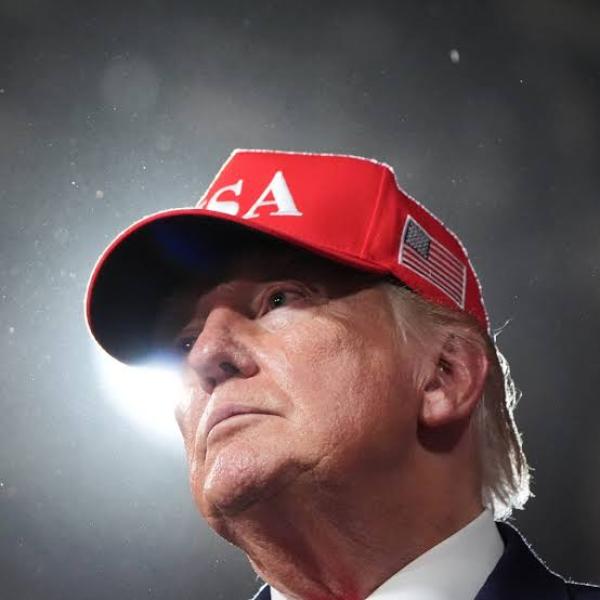
Trump appeared onstage on Wednesday to give his victory speech, saying the forgotten people of the country 'will be forgotten no longer'.
Instead of savoring victory, Clinton is now contemplating the ruins of a political career – thanks to her own self-destructing campaign.
Clinton fought back from a 2008 defeat to win a second chance at the presidency and try to break through the ultimate 'glass ceiling' – but in the end it was her own campaign and Democrats' hopes of extending the Obama legacy that were shattered.
Rather than going down as the first woman president, she became the Democrat who failed to extend the run of a fairly popular two-term president during a prolonged economic recovery, and lost an election to a political novice with a killer instinct for political attacks whose own party held him at a distance.
The scandal connected Clinton's email scandal – already a trust issue that the public ranked as serious in opinion polls – to Weiner, who is married to Clinton's longtime aide Huma Abedin and who is under investigation for having allegedly sent lewd texts to an underage girl, as reported by DailyMail.com. Weiner had quit Congress in 2011 for sending crotch shots of himself online.
The issue was so hot that longtime aide Huma Abedin, who is separating from Weiner, got effectively grounded from the Clinton campaign plane for days while the story played out.
A huge Hillary sign at the Javits Center in Manhattan, where Clinton was supposed to be hosting her victory party
On the campaign trail, Trump began reading reports about dubious Clinton Foundation activities verbatim, and hanging all of it around Clinton. Her State Department had a role in vetting paid speeches and other activities for potential conflicts of interest.
During the presidential debates, Team Trump decided to use the former president to muddy his wife. Trump brought four Clinton accusers to the debate in a ploy to try to rattle his rival. Paula Jones, who sued Clinton for sexual harassment and won a big settlement, and Juanita Broadderick, who accused him of rape, went to St. Louis for the debate and gave interviews to Reporters covering the slash-and-burn campaign.
Clinton kept her cool in the debate – but the stunt served as a reminder to the country of the baggage, charges, lawsuits, and publicity wars that have trailed the Clintons for years.
To win, Clinton had to maintain Obama's winning coalition, which included black voters thrilled by his historic candidacy, women, young people, and other minorities. The electoral college favored her, or at least most of the analysts said.
Her defeat had one mother – herself – but many fathers, including husband Bill Clinton, Russian President Vladimir Putin (according to U.S. intelligence), FBI Director James Comey, and disgraced ex-Rep. Anthony Weiner.
Clinton's path to the White House, which at times seemed almost inevitable during the 2016 campaign, had its origins in her defeat to Barack Obama in 2008. She became his loyal secretary of state, built up her popularity and chits, and began assembling a team that would become a juggernaut campaign for the White House.
All her efforts couldn't survive the onslaught of negative issues that clung to her campaign, against an opponent who played up nationalistic themes and cast her as part of the problem.
It was not immediately clear why Clinton did not choose to address her supporters. When Podesta first came out to address the crowd, his call that ‘every vote should count’ hinted at a possible legal strategy to challenge close elections.
But not long after Podesta’s vague statement, Clinton called Trump to concede the race, her spokesman confirmed.
The campaign didn’t immediately respond to an inquiry about why she didn’t speak to her backers.
Clinton showed vigor on the campaign trail during a marathon day of campaigning on Monday that took her to Michigan, Pennsylvania, North Carolina, and New York. She smiled and met with supporters on an airport tarmac at 3:30 AM.
Her voice grew hoarse at times, but she showed energy, bounding up the stairs to her jet.
The all-out schedule was in part a response to Trump’s repeated questioning of her ‘stamina.’ After her team frowned on any talk of the subject at first, Clinton began addressing it head-on in her speeches.
She joked that her four-hour debate with Trump proved she had the stamina for the job.
Clinton was up at 6:30 Tuesday morning, looking tired but cheerful, to vote near her home in Chappaqua.
On Tuesday afternoon, Clinton motorcaded to the Peninsula Hotel in Manhattan that served as a holding area while the returns came in.
According to a press pool report, as they were holed up they ‘noshed a little bit’ on a buffet that included salmon, roasted carrots, vegan pizza, and French fries.
Chelsea Clinton and husband Marc Mezvinsky were there, along with children Charlotte and Aiden.
Also 'milling around' were longtime aide Huma Abedin, campaign manager Robby Mook, former aide Philippe Reines, and communications director Jennfier Palieri.
Clinton remained in hiding Wednesday as her camp absorbed the shocking news along with the rest of the country.
Only a few Clinton campaign surrogates were on hand at the Clinton party to address reporters and do TV interviews. When the news went south for Clinton, the aides vanished.
'Never been as wrong on anything in my life,' tweeted Obama campaign guru David Plouffe, who advised the Clinton campaign and sometimes acted as a campaign surrogate.
For many of the critical months of her campaign, Clinton was under an active investigation by the FBI for potential mishandling of classified information.
Her husband's foundation was revealed to have accepted seven-figure donations from foreign monarchs. News outlets chronicled a series of relationships between foundation donors who then sought or got meetings, face time, or invitations. Her speeches to financial institutions were labeled unseemly by Democratic challengers and worse by Republicans.
Then, during the final weeks of the campaign when most voters are paying the most attention, FBI Director James Comey dropped a bombshell: that the bureau was taking another look at Clinton's emails.
It didn't take long before it was revealed that the emails in question were contained on the laptop of disgraced ex-Rep. Anthony Weiner.
So did the massive financial resources of party incumbency and a donor network decades in the making. She raised more than $500 million for her campaign, staffed an office in tony Brooklyn, and spent heavily on data and analytical components of campaigning.
Trump tried to use Clinton's massive cash advantage against her. He said Clinton was in her donors' pocket – and that he couldn't be bought because he was already rich.
But many of the advantages and resources that scared off potential Democratic primary challengers also contributed to her undoing. Her once enviable personal popularity collapsed under the weight of multiple scandals, form her private email server to the Benghazi attack to a web of interactions between foreign nations, donors, and the Clinton Foundation.
The scandals, or in some cases the appearance of them, threw a blanket over her campaign. She tried to roll out a series of policy proposals, but ended up dealing with hacks and emails until the final days of her campaign.
In the final weeks of the campaign, emails hacked from the personal account of campaign chairman John Podesta provided daily distractions. Even some of her own advisers were revealed to question Clinton's judgement.
The campaign didn't confirm the veracity of the emails, and in a dramatic moment of the campaign, Podesta blasted the Russian government for being behind the hack, citing the conclusions of U.S. officials. The campaign tried to ignore them, but the hacked leaks kept coming.
Trump in debates and appearances unerringly failed to criticize Russian President Vladimir Putin, something Clinton blasted him for when she tried to label him as a 'loose cannon' who couldn't be trusted to keep the nation's nuclear codes.
Trump seized on each of the issues in Clinton's expanding portfolio of baggage, and branded his rival as 'crooked Hillary.' He read up on accountings of the Clinton family dealing, often ripping attacks from the headlines and working them into his speeches, which featured daily improvisations and occasional outbursts that infatuated the media and delighted his supporters.
After Trump slashed through 16 other Republicans to win the GOP primary, Team Clinton was determined not to get defined by the brash real estate mogul the way fellow Republicans were despite her baggage.
Clinton was perceived to be in a substantially stronger position, having dispensed with Sanders earlier in the process, allowing her to focus on reunifying her party and putting on a political convention that got her a bump in the polls.
One of the greatest speeches of Clinton's career came in defeat. She had battled Obama long after she had a realistic chance of beating him. Even some of her close advisers realized it was time for her to get out.
Then, inside Washington's National Building Museum, she delivered a triumphant call for a woman to crack the highest 'glass ceiling in the world' – the presidency.
She jetted around the country as secretary of state, and her staff kept track of the miles as she approached the record. She left office with high popularity.
President Obama gave a joint interview with her when the left the job in 2013, in something that had the feel of a hand-off. Many of his current or former White House aides migrated to her campaign or pro-Clinton organizations.
Vice President Joe Biden considered challenging her, but elected to stay out of the race. Baggage from his own background started showing up in the press, dating to the Clarence Thomas confirmation hearings from the 1990s.
Sanders ran a stronger challenge than many expected, but her primary never approached the proving ground of the GOP slug fest. Even so, Sanders exposed weaknesses that Trump picked up and turned into more biting attacks.
Trump during the campaign accused Clinton of playing the 'woman card' – an insult she embraced.
She said regularly at her rallies that if Trump wanted to accuse her of playing the woman card, 'Then deal me in!'
She crafted whole swaths of her campaign about gender and other identity issues. She brought former Miss Universe Alicia Machado to a presidential debate to bring up Trump's treatment of her.
After the release of the infamous 'p****' tape, where Trump got caught on a hot mic talking about grabbing women by the genitals, Clinton accused Trump of mistreating and demeaning and assaulting women
She accused him of having a 'dark' divisive vision, and tried to stress hopeful themes and inclusiveness by bashing his proposed Muslim ban, and his plan to build a wall on the U.S. Mexico border.
The would-be first woman drew on empowering songs by female singers, like 'Fight Song.' Her campaign's closing argument TV ad used Katy Perry's 'Roar' as its soundtrack. Her campaign printed signs that said 'Love trumps hate.'
She opened her rallies with empowering themes by female singers, including 'Roar' by Katy Perry and 'Rise Up' by Andre Day.
As the campaign neared its conclusion, Clinton increasingly leaned on slashing attacks on her rival, even as she told supporters she would rather be talking the issues.
If her rivals looked enviously at Trump's skein of large crowds (though not always as large as he said they were), they didn't admit it. Clinton's own events were frequently far smaller. The campaign said it wasn't rally size that mattered, but media pickup and how it looked on television.
If her campaign team was worried, they didn't betray it aboard her campaign plane. Clinton made a last-minute visit to Michigan – but her campaign downplayed it as a move that made since since the state had no early voting.
Clinton's last day on the trail had the feel of a victory lap and a concert tour. It featured performances by Bruce Springsteen, Bon Jovi, and Lady Gaga.
Clinton flew home to a final rally with staff members and supporters, who cheered wildly at 3:30 in the morning when her 'Stronger Together' plane landed. There were about 200 people there.