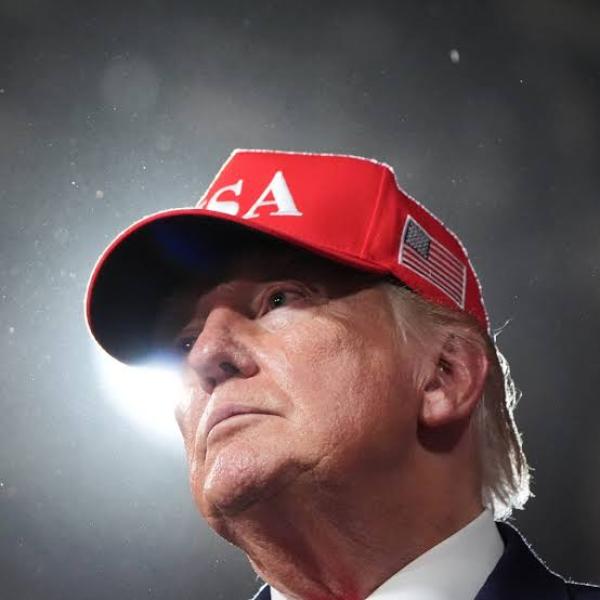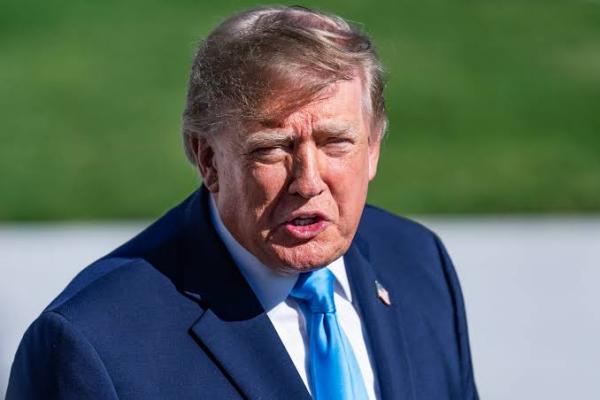





Hours after a prepared speech on "law and order" and days after a formal foreign policy address, Donald Trump is now trying to revive a struggling campaign with another staff shakeup — this one less than 90 days before the election.
“I believe we’re adding some of the best talents in politics, with the experience and expertise needed to defeat Hillary Clinton in November," Trump said Wednesday in announcing two new top staff hires.
Breitbart News Executive Chairman Stephen K. Bannon will become the campaign's CEO and veteran Republican strategist Kellyanne Conway will be campaign manager, Trump said.
The moves are widely seen as a sidelining of top aide Paul Manafort, though he retains the titles of campaign chairman and chief strategist. Manafort also issued a statement through the campaign, saying "it is imperative we continue to expand our team with top-tier talent."
The changes appear to signal that Trump, even after a series of policy speeches, will likely return to the free-wheeling, abrasive stump style that characterized his Republican primary run.
"Trump has decided to go full Trump," said Republican consultant Bruce Haynes, founding partner of Washington-based Purple Strategies. "Polish is taking a backseat to populism — he's not going to be the candidate of discipline, he's going to be the candidate of disruption."
With that, expect Trump to step up attacks on Clinton, the Democrats and perhaps the Republican establishment, as well. Bannon's news site, Breitbart, has been very supportive of Trump's campaign and very critical of establishment figures like House Speaker Paul Ryan, R-Wis.
This is the second major staff move in two months; Trump fired original campaign manage Corey Lewandowski in June.
The latest news broke during a week in which Trump is trying to stress national security and "law and order" — and amid a steady stream of polls showing him behind Clinton, both nationally and in battleground states that are the keys to winning the Electoral College.
Trump is scheduled to conduct a meeting Wednesday with national security advisers and is also set to receive his first formal intelligence briefing from U.S. officials, a courtesy extended to nominees of both parties.
In his "law and order" speech Tuesday night, Trump said, "We are at a decisive moment in this election."
Speaking some 40 miles from Milwaukee, a city racked in recent days by violent protests following the police shooting of an armed African-American man, Trump said that "law and order must be restored," and "it must be restored for the sake of all, but most especially the sake of those living in the affected communities."
The speech included an appeal to African-American voters, whom Trump noted are the frequent victims of crime. He said Democratic policies have failed African-American communities and the party itself "has taken the votes of African-Americans for granted."
He combined his remarks on law and order with an attack on what he called a "rigged system" that is trying to stop him and his supporters.
"This is our chance to take back power from all the people who’ve taken it from you," Trump told backers in Wisconsin.
"Law and order" is a familiar political term for Republicans. Richard Nixon used it during his successful presidential campaign of 1968 in response to the upheaval of that era. Critics then and now accused GOP candidates of appealing to racial fears over civil rights demonstrations and protests, as well as rising crime rates.
A procession of GOP candidates, including Presidents Ronald Reagan and George H.W. Bush, campaigned on various iterations of law and order, though the issue lost potency as crime rates fell during the 1990s and 2000s.
Historian Josh Zeitz, who is writing a book on the Great Society programs of President Lyndon Johnson, said it's unusual for Trump to try and revive a slogan on an issue that fewer people have experienced firsthand.
He added that "the term law and order in modern American politics is, ipso factor, a racially tinged term."
Heather Mac Donald, author of The War on Cops: How The New Attack on Law and Order Makes Everyone Less Safe, said Trump is providing a "perfectly accurate" description of problems that include a spike of homicides in urban areas, with mostly African-American victims.
"Law and order is not racial code," said Mac Donald, a senior fellow with the Manhattan Institute. "The people who want it are residents of high crime areas."
During his national security speech on Monday, Trump said that President Obama and Clinton, a former secretary of State, abetted the growth of the Islamic State and other extremist groups though bad foreign policy. He proposed "extreme vetting" of people seeking to enter the United States from Muslim countries, including a citizenship test for immigration applicants.
In announcing his staff changes, Trump said, "I am committed to doing whatever it takes to win this election, and ultimately become President because our country cannot afford four more years of the failed Obama-Clinton policies which have endangered our financial and physical security.”
Analysts said that news of the staff moves could interfere with the campaign's attempts to sharpen its message.
Haynes said the staff changes are another sign of "disruption" with the Republican campaign. He described the new version as "Trump 3.0," following the regimes of Lewandowski and Manafort.
"Perhaps finally he is committed to a strategy and a plan," Haynes said. "It's getting awfully late for any more changes."