



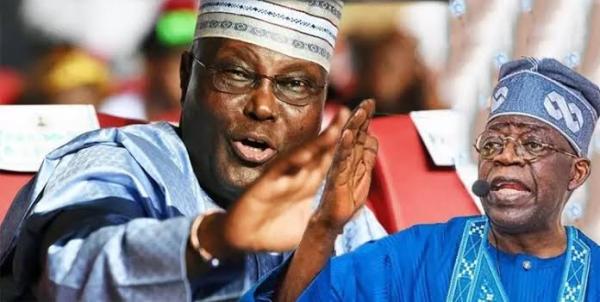
Presidential candidate of the African Democratic Congress (ADC), Atiku Abubakar, has challenged President Bola Tinubu over his description of Nigeria as a cancer patient, questioning why Nigerians are still grappling with economic hardship three years into the administration.
Atiku spoke on Thursday in Abuja during a world press conference, reacting to Tinubu’s Independence Day address in which the President compared Nigeria’s economic condition in 2023 to that of a cancer patient requiring difficult but necessary treatment.
“Bola, you called Nigeria a patient with cancer. After three years of your treatment, why is it harder for Nigerians to buy food, pay for medicine, or even get to work? Why does your government have more money while the people can afford less?” Atiku asked.
He said the hardship being experienced by Nigerians could not simply be presented as evidence that the government’s economic reforms were working, arguing that citizens had the right to demand answers over when conditions would improve.
“You said Nigerians must endure the pain because you are curing the disease, but when a patient cries out, a doctor listens. He does not call the patient retrogressive for asking when he will get better. He does not point to the hospital’s rising revenue and declare him healed,” he said.
Atiku further questioned the administration’s claim of progress, noting that many Nigerians were struggling to meet basic needs.
“A patient who cannot afford to live is not proof that the treatment is working. Absolutely not,” he said.
He also faulted Tinubu for presenting Nigeria’s economic challenges as though they began with the current administration, stressing that the President’s All Progressives Congress (APC) had been in power for several years before Tinubu assumed office in 2023.
“And you cannot speak as though you arrived from the moon in 2023. Your party had governed Nigeria for eight years, if not more,” Atiku said.
He challenged the administration to assess its reforms from the perspective of ordinary Nigerians who continue to make difficult choices over food, healthcare and transportation.
“If the country was as sick as you say, tell Nigeria to come to the places where Nigerians make their daily choices,” he added.