



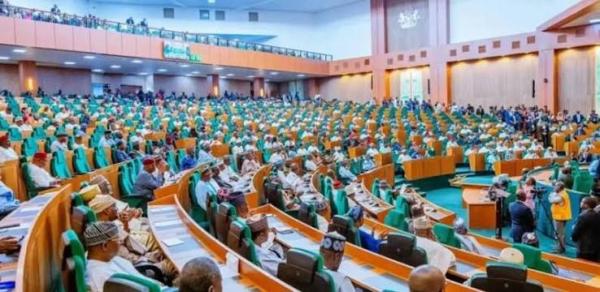
The House of Representatives has passed the constitutional amendment bill seeking to establish state police, with 311 lawmakers voting in support of the proposal—surpassing the two-thirds majority required to alter the Constitution.
The passage of the landmark bill, however, was marred by protests from members of the minority caucus, who staged a walkout in opposition to what they described as procedural violations during its consideration.
Deputy Speaker Benjamin Kalu, who also chairs the House Committee on Constitution Review, presided over the consideration of the committee's report and urged lawmakers to support the bill before it was subjected to electronic and virtual voting.
Following the vote, members of the minority caucus, led by Minority Leader Fred Agbedi, walked out of the chamber, alleging that the House leadership breached constitutional provisions and the Standing Orders in the process leading to the bill's passage.
Although the opposition lawmakers expressed support for the creation of state police, they insisted that due process was not followed. Addressing journalists after the plenary, the caucus reiterated its backing for the legislation but maintained that the procedure adopted undermined constitutional and parliamentary rules.
Responding to the concerns, Chairman of the House Committee on Defence, Babajimi Benson, defended the process, insisting that the bill was validly considered and passed by the House.
During the same sitting, lawmakers also approved a bill establishing the Federal College of Fisheries Technology and Marine Engineering in Rivers State before adjourning plenary until September 15, 2026.
The House's approval came four weeks after the Senate passed the same constitutional amendment bill, marking another significant step toward the establishment of state police in Nigeria.
The proposed legislation seeks to replace the existing Nigeria Police Force structure with a dual policing system comprising a Federal Police Service and State Police Services, allowing both levels of government to operate independent police formations.
Among its key provisions is the power granted to state governors to appoint Commissioners of Police for their respective states, subject to confirmation by the State Houses of Assembly.
The bill also outlines the operational relationship between governors and state police commands. Under Section 17(6), a governor may issue lawful written directives of a general policy nature to the Commissioner of Police on matters relating to public safety and public order within the state.
To address concerns over possible political abuse of state police, lawmakers included safeguards aimed at protecting civil liberties and democratic freedoms.
Section 17(7) provides that a state Commissioner of Police shall not arrest, detain, investigate, or deploy force against any individual, political party, or group merely for criticising the government, except where such actions are carried out in accordance with the law.
The safeguard is intended to prevent state police from being used as instruments of political persecution against opposition figures, journalists, activists, and other dissenting voices while ensuring strict adherence to due process.
President Bola Tinubu had earlier transmitted the bill to the National Assembly as part of his administration's broader efforts to reform Nigeria's security architecture.
According to the President, the proposed constitutional amendment provides the legal framework for a dual policing structure that will enable states to establish and operate their own police services alongside the federal police.
Tinubu said the reform is a critical component of efforts to restructure Nigeria's policing system, strengthen grassroots intelligence gathering, improve internal security, and enhance the country's capacity to respond effectively to emerging security threats.
With both chambers of the National Assembly now having approved the bill, the proposed constitutional amendment moves closer to becoming law, representing one of the most significant policing reforms in Nigeria's democratic history.