




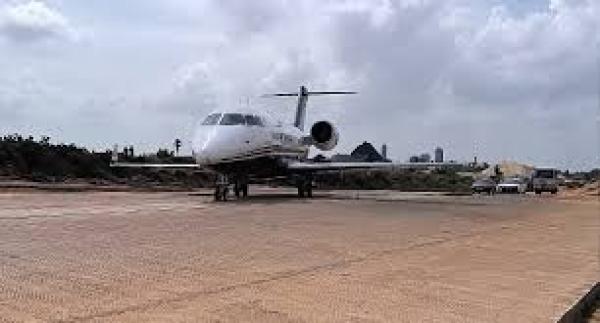
The Nigerian Civil Aviation Authority (NCAA) has explained why a 75-year-old pilot was permitted to operate a private aircraft that recently landed on a road in the Ogwashi-Uku area of Delta State.
According to the NCAA, the aircraft, registered as N989BC, was being flown by a 75-year-old pilot and a 70-year-old co-pilot, both of whom hold United States Federal Aviation Administration (FAA) licences and were operating under American aviation regulations.
Speaking on News Night, a programme on Arise TV, the NCAA's Director of Operations, Licensing and Training, Capt. Don Spiff, said neither pilot violated any age-related aviation rules because the aircraft is registered in the United States and operated under FAA regulations.
He noted that while Nigeria currently restricts commercial pilots from flying beyond the age of 65, the country is reviewing its aviation regulations to potentially allow pilots above that age to continue flying private aircraft, subject to strict medical requirements.
Spiff disclosed that the Nigerian Safety Investigation Bureau (NSIB) has commenced an investigation into the incident to determine the circumstances surrounding the aircraft's unexpected landing on a newly constructed road after it reportedly failed to land at Asaba Airport.
"The pilot is 75 years old and the co-pilot is 70. They hold American licences and are not considered over-aged under the regulations governing their operations," he said.
He explained that the aircraft had filed a flight plan from Lagos to Asaba and had attempted to land at its intended destination before carrying out a go-around. The exact reasons the aircraft later landed on a road remain under investigation.
Spiff, however, criticised the pilot's decision to take off again from the road, describing the action as unauthorised because no clearance had been obtained. He said sanctions would follow and confirmed that the NCAA has already suspended the operator's commercial certificate pending further review.
The NCAA official also stressed that the incident should not be viewed as evidence of broader safety concerns within Nigeria's aviation sector.
According to him, Nigeria's airspace remains safe, adding that the road landing was an isolated occurrence that should not undermine public confidence in the country's aviation system.