



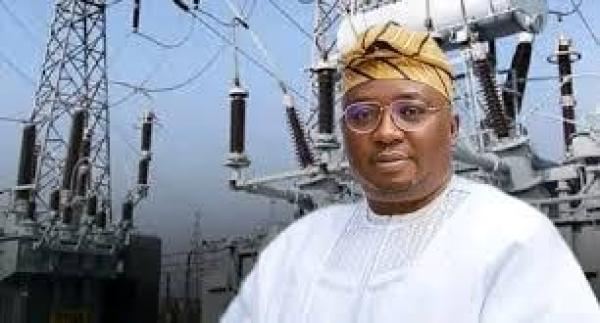
Nigerians are expected to experience a gradual improvement in electricity supply within the next two weeks, the Chief Technical Adviser to the Minister of Power, Adebayo Olowoniyi, has said, as maintenance work on a major gas pipeline nears completion.
Olowoniyi made the disclosure on Thursday during an appearance on Arise TV, following a public apology by the Minister of Power, Adebayo Adelabu, over persistent power outages that have recently disrupted homes, businesses, schools, and industries across the country.
Defending the minister’s apology, Olowoniyi described it as a demonstration of strong leadership rather than an admission of personal responsibility.
“Not necessarily directly his fault for the challenges that we have, but as the Minister of Power, he took the right leadership step to say, ‘I take ownership of this issue and will ensure a solution that restores power in the shortest time possible,’” he said.
He explained that the outages were primarily caused by disruptions to a key gas pipeline, noting that about 75 per cent of Nigeria’s electricity generation depends on gas.
“One of the major gas pipelines in Nigeria was undergoing maintenance, and that process is now nearing completion. Within the next two weeks, full gas pressure will be restored, enabling power plants to reach their previous generation levels from the last two to three months,” Olowoniyi said.
He added that the recovery process has already begun and is expected to continue steadily over the coming weeks.
“From yesterday, we have started to see some improvement as the pipeline pressure gradually builds up. Continuous progress should be visible over the next couple of weeks,” he said.
Adelabu had earlier, on Tuesday in Abuja, apologised to Nigerians for the outages, attributing them to factors beyond the government’s immediate control while providing a firm two-week timeline for improvement.
“With the committee we have set up, commitments from gas suppliers, and the repair timeline for the gas pipelines, we should begin to see improvements in supply in two weeks,” he said.
The minister also reaffirmed the Federal Government’s goal of increasing electricity generation to 6,000 megawatts before the end of 2026, describing the current disruption as a temporary setback.
Nigeria’s power sector has long faced challenges including insufficient gas supply, ageing infrastructure, transmission bottlenecks, and persistent liquidity issues across the value chain.