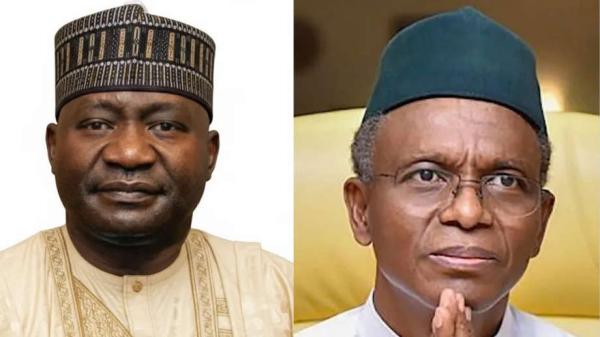




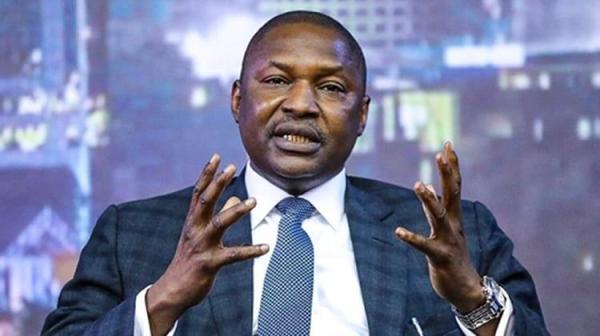
Former Attorney-General of the Federation and Minister of Justice, Abubakar Malami, has denied any link to terrorism financing following a recent publication that referenced his name in connection with alleged terror suspects and purported financiers.
In a statement he posted on his official social media platforms on Friday, Malami described the allegations as “unfounded and unfair, stressing that he has never been investigated, interrogated, or charged by any security or intelligence agency within or outside Nigeria over terrorism financing or related offences.
Malami noted that the retired military officer cited in the report had explicitly stated that he was not accusing him or other individuals of financing terrorism.
Rather, the claims referenced alleged “business” or “institutional” relationships involving some suspects, details Malami said were subsequently distorted into misleading narratives that his political opponents exploited for mischief.
“Terrorism financing is a grave crime. Any attempt to associate an individual with such an offence must be grounded in verifiable facts, not conjecture or guilt by association,” he said, warning against weaponising routine institutional engagements to malign public officials.
Highlighting his tenure as Attorney-General, Malami pointed to several reforms he championed that directly strengthened Nigeria’s anti-money-laundering and counter-terrorism-financing (AML/CFT) frameworks.
These included the establishment of an independent Nigerian Financial Intelligence Unit (NFIU), the enactment of the Money Laundering (Prevention and Prohibition) Act 2022, and the Terrorism (Prevention and Prohibition) Act 2022.
He said these reforms, implemented in collaboration with the National Assembly, law-enforcement agencies, the Central Bank of Nigeria, and international partners, formed part of the efforts assessed by the Financial Action Task Force (FATF), contributing to Nigeria’s eventual removal from the organisation’s grey list of countries under increased monitoring.
According to him, such internationally validated progress “is entirely inconsistent with any suggestion” that he or others who led the reforms were involved in shielding or supporting terror financiers.
Malami reaffirmed his respect for the media’s role but urged responsible reporting, especially on matters concerning national security.
He warned that careless or sensational framing could damage reputations and erode public trust in institutions tasked with safeguarding national security.